



Sinapis alba
Mustard, White - microgreens seeds
✨
- Regular price
-
18,00 zł - Regular price
-
- Sale price
-
18,00 zł
Couldn't load pickup availability
Twelve days to a tray full of fiery, jewel-green bite — white mustard microgreens are the fastest flavour upgrade in your kitchen.
 Very easy to grow — mucilaginous seeds need no soaking and germinate vigorously within 2–3 days; ideal for beginners and commercial growers alike.
 Ready to harvest in just 8–12 days from sowing, making it one of the fastest-cycling crops in any microgreen rotation.
 Rich in vitamins C, K and A, plus calcium, potassium and manganese; contains sinalbin-derived isothiocyanates and polyphenols that support antioxidant defences and healthy blood clotting.
 Delivers a clean, mild-hot mustard flavour with a juicy, tender bite — perfect for layering into sandwiches, topping grain bowls, finishing soups, or adding snap to sushi rolls.
100% satisfaction guarantee
Your satisfaction is our top priority.
If something's not right, we’ll make it right — whether that means replacing your item or giving you a full refund. No fuss, no hassle.
SHIPPING INFORMATION
Shipping cost is based on weight and destination. Just add products to your cart and use the Shipping Calculator to see the shipping price.


Details
Twelve days to a tray full of fiery, jewel-green bite — white mustard microgreens are the fastest flavour upgrade in your kitchen.
Very easy to grow — mucilaginous seeds need no soaking and germinate vigorously within 2–3 days; ideal for beginners and commercial growers alike.
Ready to harvest in just 8–12 days from sowing, making it one of the fastest-cycling crops in any microgreen rotation.
Rich in vitamins C, K and A, plus calcium, potassium and manganese; contains sinalbin-derived isothiocyanates and polyphenols that support antioxidant defences and healthy blood clotting.
Delivers a clean, mild-hot mustard flavour with a juicy, tender bite — perfect for layering into sandwiches, topping grain bowls, finishing soups, or adding snap to sushi rolls.
FULL SPECIFICATION TABLE
General Specification
| Common Name | White Mustard microgreens |
| Botanical Name | Sinapis alba |
| Seed Type | Conventional, untreated, non-GMO |
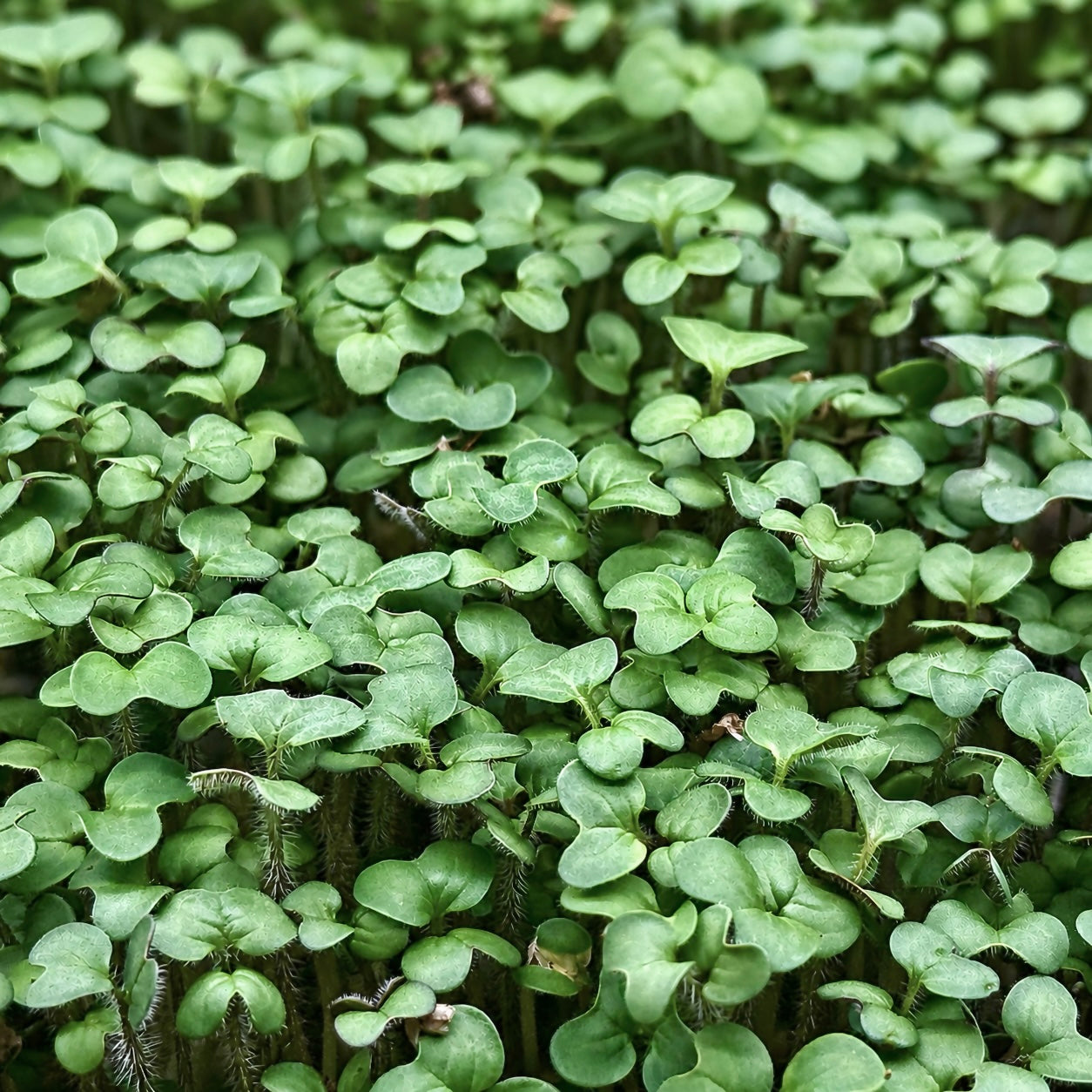
| Stem/Leaf Color | Bright green cotyledons on pale cream-white stems |
| Flavor & Texture | Mild-hot mustard heat; tender, juicy bite |
| Seed Count per 10g | ≈2,000–2,500 seeds (≈200–250 seeds/g) |
Cultivation Data
| Difficulty | Very easy — vigorous germinator; mucilaginous seeds require no soaking |
| Preferred Medium | Fine potting soil, coco coir, or grow mats; sow evenly on a level surface |
| Seeding Density (1020 tray) | About 35 g (30–40 g) per 1020 tray (25×50 cm) |
| Seeding Density (10x10 cm) | About 2.8 g (2.4–3.2 g) per 10×10 cm |
| Expected Yield | ≈300 g per 1020 tray |
| Soaking | No soaking — seeds are mucilaginous and must be sown dry |
| Blackout Days | 2–3 days under weighted cover at 18–22 °C |
| Watering, pH & Temp | Bottom-water only; keep medium evenly moist but not waterlogged. pH 6.0–6.5. Temperature 18–22 °C. Ensure good airflow after germination. |
| Sprouting Time | 2–3 days |
| Harvest Time | 8–12 days from sowing |
Health & Nutrition
| Vitamins | Vitamin C, Vitamin K (phylloquinone), Vitamin A (beta-carotene) |
| Minerals | Calcium, potassium, manganese |
| Notable Compounds | Glucosinolates (primarily sinalbin) → isothiocyanates (p-hydroxybenzyl isothiocyanate); flavonoids (kaempferol, quercetin); polyphenols including sinapic acid; alpha-tocopherol (vitamin E) |
| Health Benefits | Isothiocyanates and flavonoids provide antioxidant, anti-inflammatory and antimicrobial activity; vitamin K supports normal blood clotting; vitamin C contributes to immune function and collagen synthesis; glucosinolates are associated with activation of the body's natural antioxidant enzyme pathways |
ABOUT
White mustard (Sinapis alba) is one of the most rewarding microgreens you can grow: a handful of seeds transforms into a dense, vivid-green canopy within less than two weeks, with virtually no effort. Bite into a freshly cut stem and you get a clean, building heat — not aggressive, but unmistakably mustard — backed by a satisfying juicy crunch that holds up even under a light dressing. The slender pale stems and bright, flat cotyledons make it as pretty on a plate as it is punchy on the palate; scatter a small pinch over smoked salmon, avocado toast, or a warm lentil salad and the whole dish comes alive. Because white mustard seeds are mucilaginous, they lock moisture to the medium and practically germinate themselves — grow a tray now and you'll understand why professional chefs keep it on permanent rotation.
GROWING INSTRUCTIONS
Why Choose Deliseeds?
-
Untreated & Non-GMO, Conventional or Organic Safe, high-germination seeds. We also offer wide selection of certified organic seeds.
-
Fast EU Shipping
Orders dispatched within 24h. Delivery times 1-5 working days.
-
100% Satisfaction Guarantee
If you're not satisfied - you'll get a replacement or a refund.
-
Expert Support
We mean it! You get our personnal support to help you succeed.