


Nasturtium officinale
Watercress - microgreens seeds
✨Peppery watercress microgreens with a fresh, crisp bite – easy to grow on a kitchen counter in under two weeks.
- Regular price
-
€9,95 - Regular price
-
- Sale price
-
€9,95
Couldn't load pickup availability
Tiny leaves, enormous punch — watercress microgreens bring bold peppery fire to every plate.
 Beginner-friendly brassica family crop; grows beautifully in soil or on hydroponic mats with minimal inputs
 Ready to harvest in just 7–12 days from sowing — one of the faster microgreen crops you can grow
 Rich in vitamins A, C, E, and K, plus calcium, magnesium, potassium, and powerful glucosinolates and isothiocyanates
 Bold, peppery flavour similar to mustard or radish — perfect on salads, sandwiches, soups, egg dishes, and seafood
100% satisfaction guarantee
Your satisfaction is our top priority.
If something's not right, we’ll make it right — whether that means replacing your item or giving you a full refund. No fuss, no hassle.
SHIPPING INFORMATION
Shipping cost is based on weight and destination. Just add products to your cart and use the Shipping Calculator to see the shipping price.

Details
Tiny leaves, enormous punch — watercress microgreens bring bold peppery fire to every plate.
Beginner-friendly brassica family crop; grows beautifully in soil or on hydroponic mats with minimal inputs
Ready to harvest in just 7–12 days from sowing — one of the faster microgreen crops you can grow
Rich in vitamins A, C, E, and K, plus calcium, magnesium, potassium, and powerful glucosinolates and isothiocyanates
Bold, peppery flavour similar to mustard or radish — perfect on salads, sandwiches, soups, egg dishes, and seafood
FULL SPECIFICATION TABLE
General Specification
| Common Name | Watercress |
| Botanical Name | Nasturtium officinale |
| Seed Type | Small, round, reddish-brown; mucilaginous when wet |
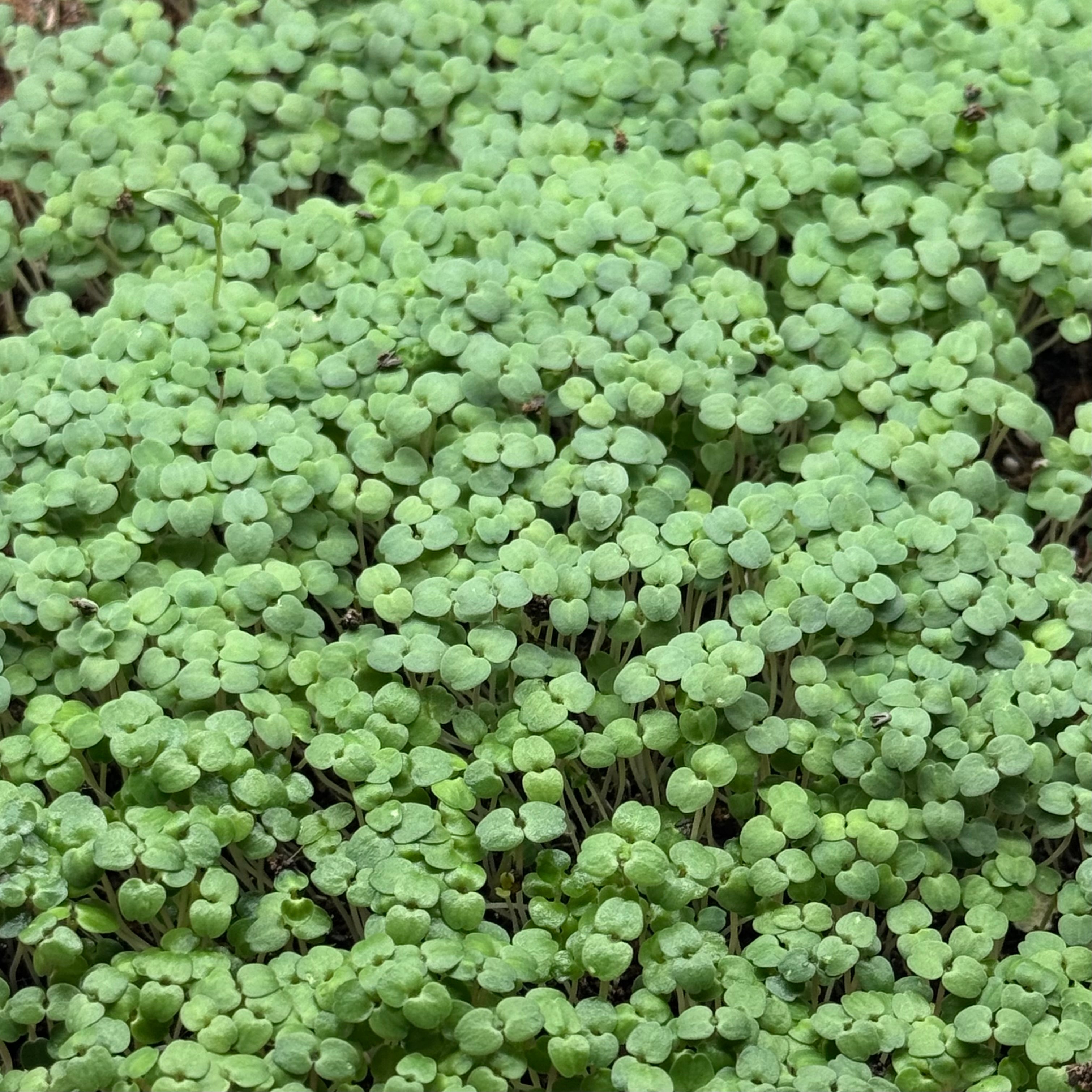
| Stem/Leaf Color | Pale green stems; round, glossy, vivid emerald-green cotyledon leaves |
| Flavor & Texture | Bold, sharp, peppery flavour similar to mustard and radish; tender and delicate texture |
| Seed Count per 10g | Approx. 220,000–250,000 seeds per 10 g (based on ~22,000 seeds/oz per True Leaf Market) |
Cultivation Data
| Difficulty | Easy |
| Preferred Medium | Coconut coir, seed-starting mix, or hydroponic grow mat; also well-suited to hydroponic systems (NFT, DWC) |
| Seeding Density (1020 tray) | 10–15 g per 1020 tray (25×50 cm); ~12 g is a reliable midpoint |
| Seeding Density (10x10 cm) | ~1 g per 10×10 cm |
| Expected Yield | Approximately 80–150 g fresh weight per 25×50 cm tray, depending on harvest stage and conditions |
| Soaking | No soaking required; seeds are mucilaginous and self-hydrate from a moist medium |
| Blackout Days | 4–5 days total (including germination phase of 3–4 days under cover) |
| Watering, pH & Temp | Bottom water preferred after germination; pH 5.5–6.5; germination temperature 20–24°C, growing temperature 18–22°C; avoid overwatering |
| Sprouting Time | 3–4 days |
| Harvest Time | 7–12 days from sowing; harvest at cotyledon stage or when first true leaves begin to emerge, at approximately 5 cm height |
Health & Nutrition
| Vitamins | Vitamins A, B-complex (B1, B2, B3, B5, B6), C, D, E, and K (over 100% RDI per serving in mature watercress; concentrated in microgreen form) |
| Minerals | Calcium, magnesium, potassium, phosphorus, iron, manganese, copper, iodine, zinc |
| Notable Compounds | Glucosinolates, isothiocyanates (notably benzyl isothiocyanate), carotenoids (beta-carotene, lutein, zeaxanthin), polyphenols, anthocyanins, dietary nitrates, rutin, folic acid |
| Health Benefits | High antioxidant activity (outperforms many cruciferous vegetables in phenol content and free-radical neutralisation); supports bone health via calcium, magnesium, vitamin K; immune and skin support via vitamins A and C; liver enhanced exercise performance via dietary nitrates; low calorie and hydrating (approx. 89% water content) |
ABOUT
Watercress (Nasturtium officinale) is one of the most ancient cultivated greens on earth, and as a microgreen it delivers its signature sharp, peppery bite in a form far more tender and easy to grow than the full-size plant. The tiny round leaves emerge glossy and vibrantly emerald-green, with a clean, fresh aroma that hints at mustard and garden cress — snip a stem and you'll catch a lively, almost spicy fragrance instantly. As a microgreen it shines scattered over a soft-boiled egg or folded into a classic British egg sandwich, where its heat plays beautifully against creamy, rich elements. Watercress microgreens also offer enhanced antioxidant levels compared to mature watercress, making this an exceptionally rewarding crop to grow right now.
GROWING INSTRUCTIONS
Why Choose Deliseeds?
-
Untreated & Non-GMO, Conventional or Organic Safe, high-germination seeds. We also offer wide selection of certified organic seeds.
-
Fast EU Shipping
Orders dispatched within 24h. Delivery times 1-5 working days.
-
100% Satisfaction Guarantee
If you're not satisfied - you'll get a replacement or a refund.
-
Expert Support
We mean it! You get our personnal support to help you succeed.