



Amaranthus cruentus
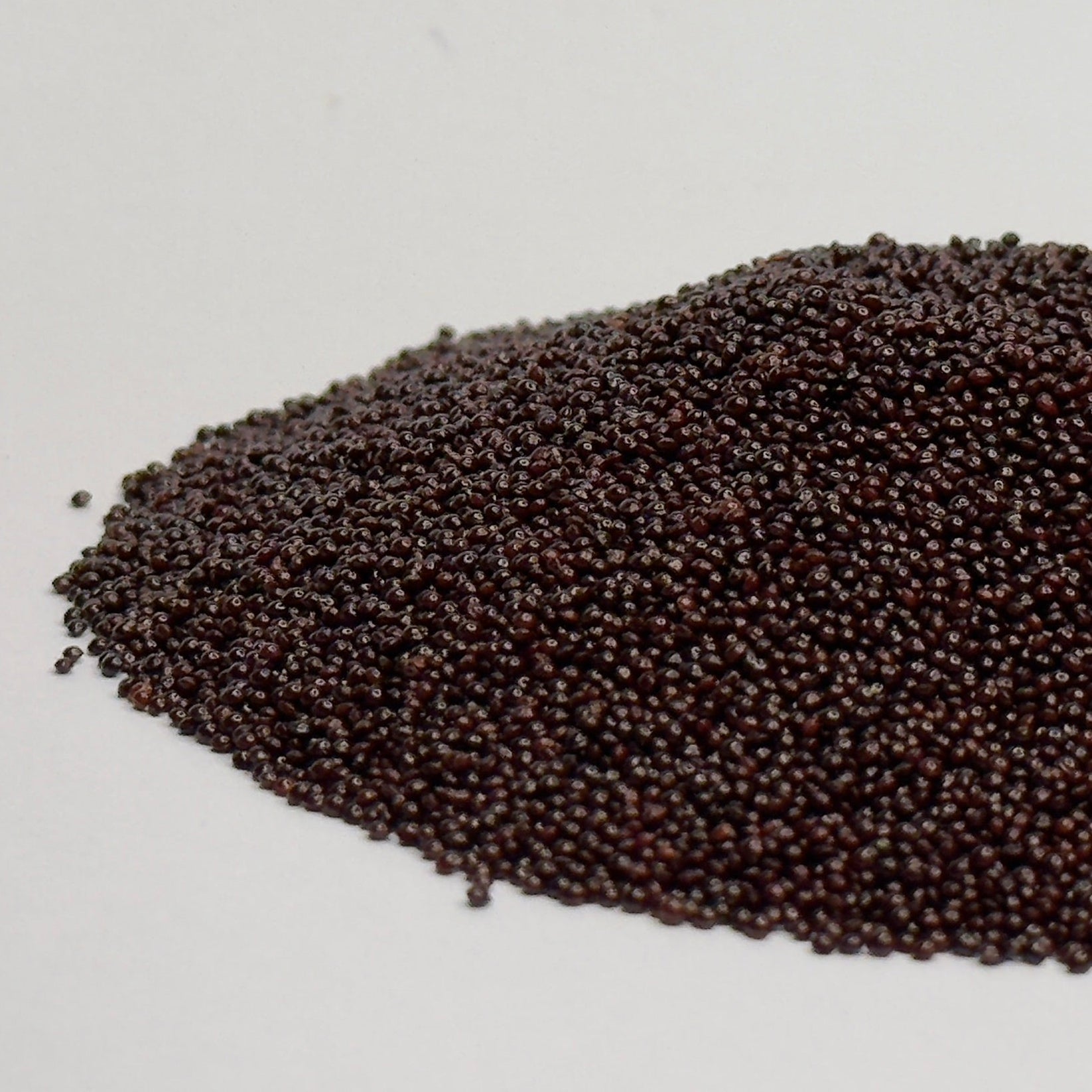
Amaranth, Red (black seeds) - microgreens seeds
✨Delicate green leaves with subtle ruby accents bring elegance to refined plating. Mild, earthy notes pair beautifully with citrus and soft cheeses.
- Regular price
-
35,00 zł - Regular price
-
- Sale price
-
35,00 zł
Couldn't load pickup availability
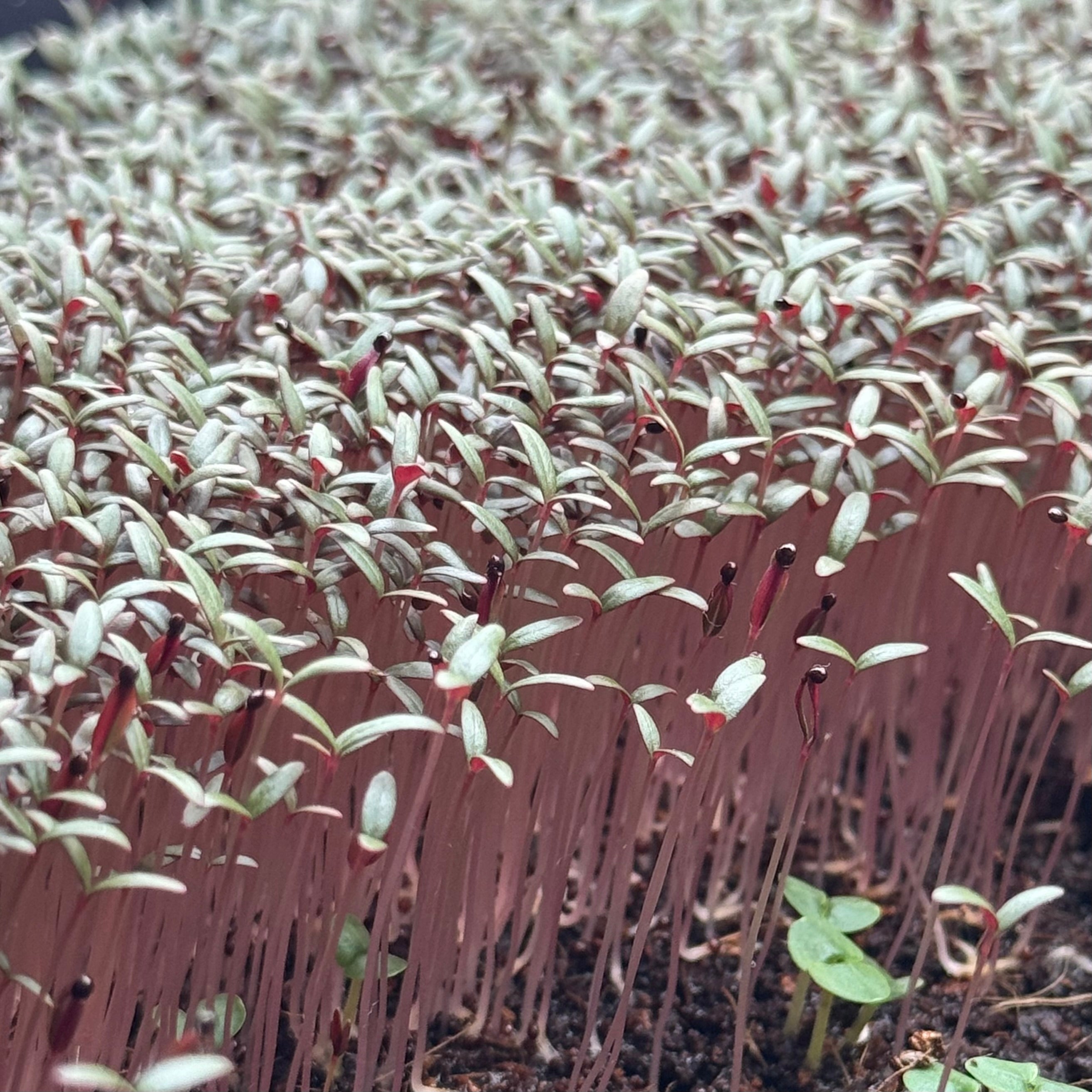
A two-tone microgreen with blush-pink stems and green leaves blushed purple underneath — subtle, elegant, and unmistakably Red Amaranth.
 Medium difficulty — rewards careful watering with a distinctive two-tone canopy — soft pink stems and green leaves with a purple blush underneath
 Ready to harvest in 10–12 days (cotyledon to early true leaf stage); no pre-soaking required
 Exceptionally rich in vitamins K, C, A, and E, plus iron, calcium, and magnesium — with notably high antioxidant activity among all microgreens
 Mild, earthy-sweet flavour with featherlight texture — a chef's garnish staple for salads, egg dishes, soups, and cocktails
100% satisfaction guarantee
Your satisfaction is our top priority.
If something's not right, we’ll make it right — whether that means replacing your item or giving you a full refund. No fuss, no hassle.
SHIPPING INFORMATION
Shipping cost is based on weight and destination. Just add products to your cart and use the Shipping Calculator to see the shipping price.

Details
A two-tone microgreen with blush-pink stems and green leaves blushed purple underneath — subtle, elegant, and unmistakably Red Amaranth.
Medium difficulty — rewards careful watering with a distinctive two-tone canopy — soft pink stems and green leaves with a purple blush underneath
Ready to harvest in 10–12 days (cotyledon to early true leaf stage); no pre-soaking required
Exceptionally rich in vitamins K, C, A, and E, plus iron, calcium, and magnesium — with notably high antioxidant activity among all microgreens
Mild, earthy-sweet flavour with featherlight texture — a chef's garnish staple for salads, egg dishes, soups, and cocktails
FULL SPECIFICATION TABLE
General Specification
| Common Name | Red Amaranth microgreens |
| Botanical Name | Amaranthus cruentus |
| Seed Type | Conventional, untreated, non-GMO |
| Stem/Leaf Color | Pale blush-pink stems; leaves green on top, with a purple-pink tint on the underside |
| Flavor & Texture | Mild, earthy-sweet; very delicate, melt-in-the-mouth leaves |
| Seed Count per 10g | ~13,000–15,000 seeds (≈850–1,500/g depending on cultivar) |
Cultivation Data
| Difficulty | Medium (sensitive to overwatering and poor air circulation; rewards attentive care) |
| Preferred Medium | Quality potting mix or coco mat; bottom-watering strongly preferred after germination |
| Seeding Density (1020 tray) | 7.5 g per 1020 tray (25×50 cm) |
| Seeding Density (10x10 cm) | 0.6 g per 10×10 cm |
| Expected Yield | ≈180–200 g per 1020 tray (at second true leaf stage) |
| Soaking | No — seeds are too small; wetting before sowing causes clumping |
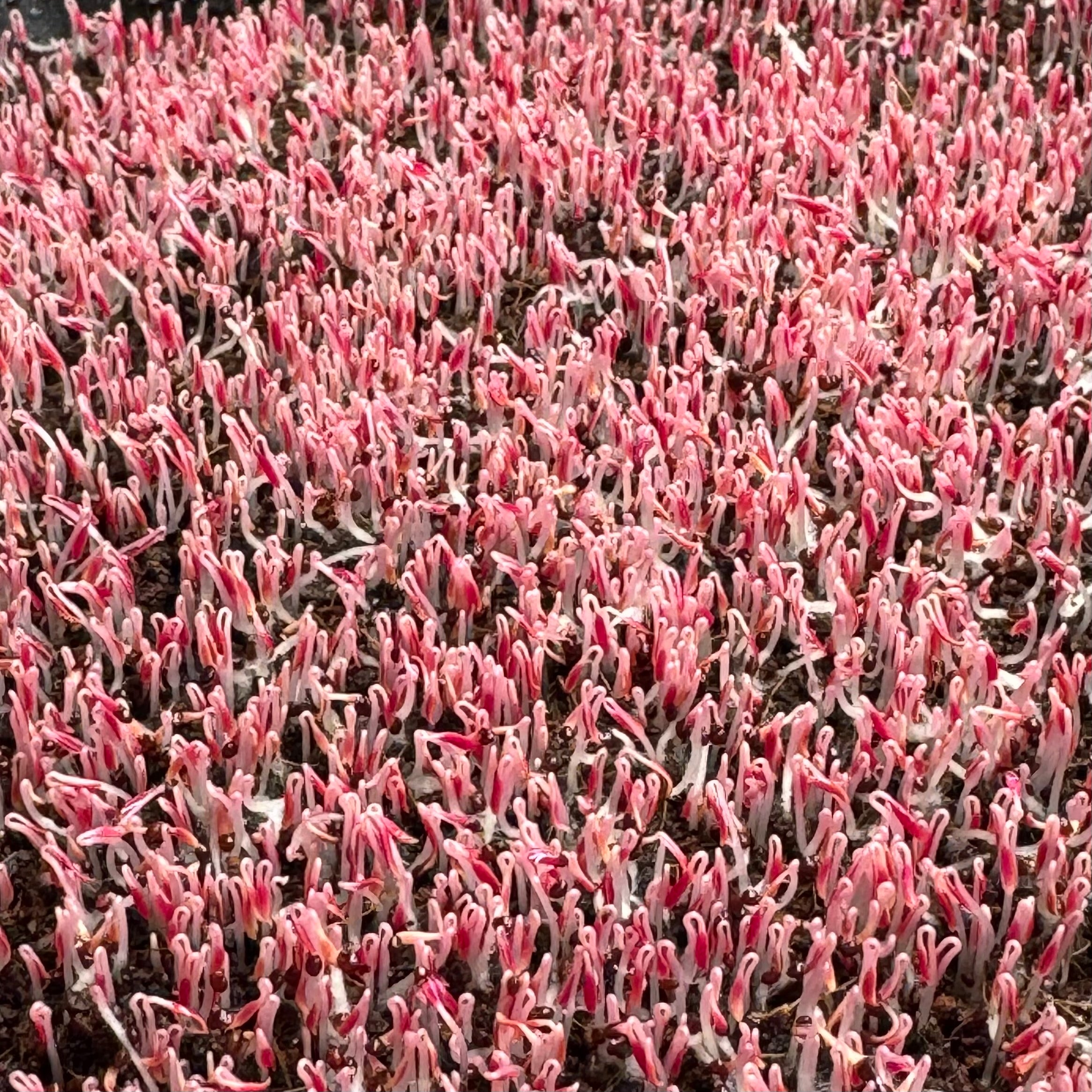
| Blackout Days | 3–4 days |
| Watering, pH & Temp | Moist, not soggy; bottom-watering preferred; pH ~6.0–6.5; 20–24 °C |
| Sprouting Time | 3–5 days |
| Harvest Time | 10–12 days (cotyledon/early true leaf); up to 17 days for full true leaf canopy |
Health & Nutrition
| Vitamins | Vitamins K (exceptionally high — up to 950% RDA per serving), C, A, E, folate (B9), and B-vitamins |
| Minerals | Iron, calcium, magnesium, potassium, phosphorus, manganese, zinc |
| Notable Compounds | Betalain pigments (amaranthin and isoamaranthin); polyphenols; carotenoids (beta-carotene, lutein, zeaxanthin); dietary fibre; complete protein with lysine |
| Health Benefits | Outstanding antioxidant activity — among the highest of all microgreens tested. Vitamin K supports normal blood clotting and bone health; vitamin C contributes to immune function and collagen synthesis; iron and folate support red blood cell production; calcium, magnesium, and phosphorus contribute to bone density; polyphenols and carotenoids help protect cells from oxidative stress. |
ABOUT
Red Amaranth microgreens are the undisputed colour stars of the microgreens world: their blush-pink stems and green leaves with a purple-pink underside are more subtle than their name suggests — a result of betalain pigments, the same compounds that give beetroot its colour, expressed here in a gentler, more elegant way. Each tiny leaf carries a flavour that is mild and gently earthy-sweet, almost spinach-like, with a texture so delicate it melts against the palate rather than chewing through it. Chefs reach for them instinctively as a finishing garnish on seared scallops, roasted pear soup, or a simple ricotta bruschetta, because the two-tone effect — green on top, purple-blushed beneath — adds visual depth that no food colouring could match. Add them to salads for a subtle wash of colour or scatter on a smoothie bowl for an elegant finish: this is a variety that rewards a closer look.
GROWING INSTRUCTIONS
Why Choose Deliseeds?
-
Untreated & Non-GMO, Conventional or Organic Safe, high-germination seeds. We also offer wide selection of certified organic seeds.
-
Fast EU Shipping
Orders dispatched within 24h. Delivery times 1-5 working days.
-
100% Satisfaction Guarantee
If you're not satisfied - you'll get a replacement or a refund.
-
Expert Support
We mean it! You get our personnal support to help you succeed.