



Vigna radiata
Mung Bean - microgreens seeds
✨
- Regular price
-
€3,95 - Regular price
-
- Sale price
-
€3,95
Couldn't load pickup availability
The original bean shoot — crisp, juicy and ready to harvest in under two weeks.
 High-yield legume microgreen; thick tray of plump shoots from a single 150–200 g seeding
 Germinates in 2–3 days; harvest-ready in 8–12 days with minimal attention
 Rich in plant protein, dietary fiber, vitamin C, folate, and key minerals including iron, magnesium and zinc
 Mild, sweet legume flavour with a satisfying crunch — ideal raw in Asian stir-fries, noodle bowls, salads and wraps
100% satisfaction guarantee
Your satisfaction is our top priority.
If something's not right, we’ll make it right — whether that means replacing your item or giving you a full refund. No fuss, no hassle.
SHIPPING INFORMATION
Shipping cost is based on weight and destination. Just add products to your cart and use the Shipping Calculator to see the shipping price.


Details
The original bean shoot — crisp, juicy and ready to harvest in under two weeks.
High-yield legume microgreen; thick tray of plump shoots from a single 150–200 g seeding
Germinates in 2–3 days; harvest-ready in 8–12 days with minimal attention
Rich in plant protein, dietary fiber, vitamin C, folate, and key minerals including iron, magnesium and zinc
Mild, sweet legume flavour with a satisfying crunch — ideal raw in Asian stir-fries, noodle bowls, salads and wraps
FULL SPECIFICATION TABLE
General Specification
| Common Name | Mung Bean microgreens / shoots |
| Botanical Name | Vigna radiata (L.) Wilczek |
| Seed Type | Conventional, untreated, non-GMO |
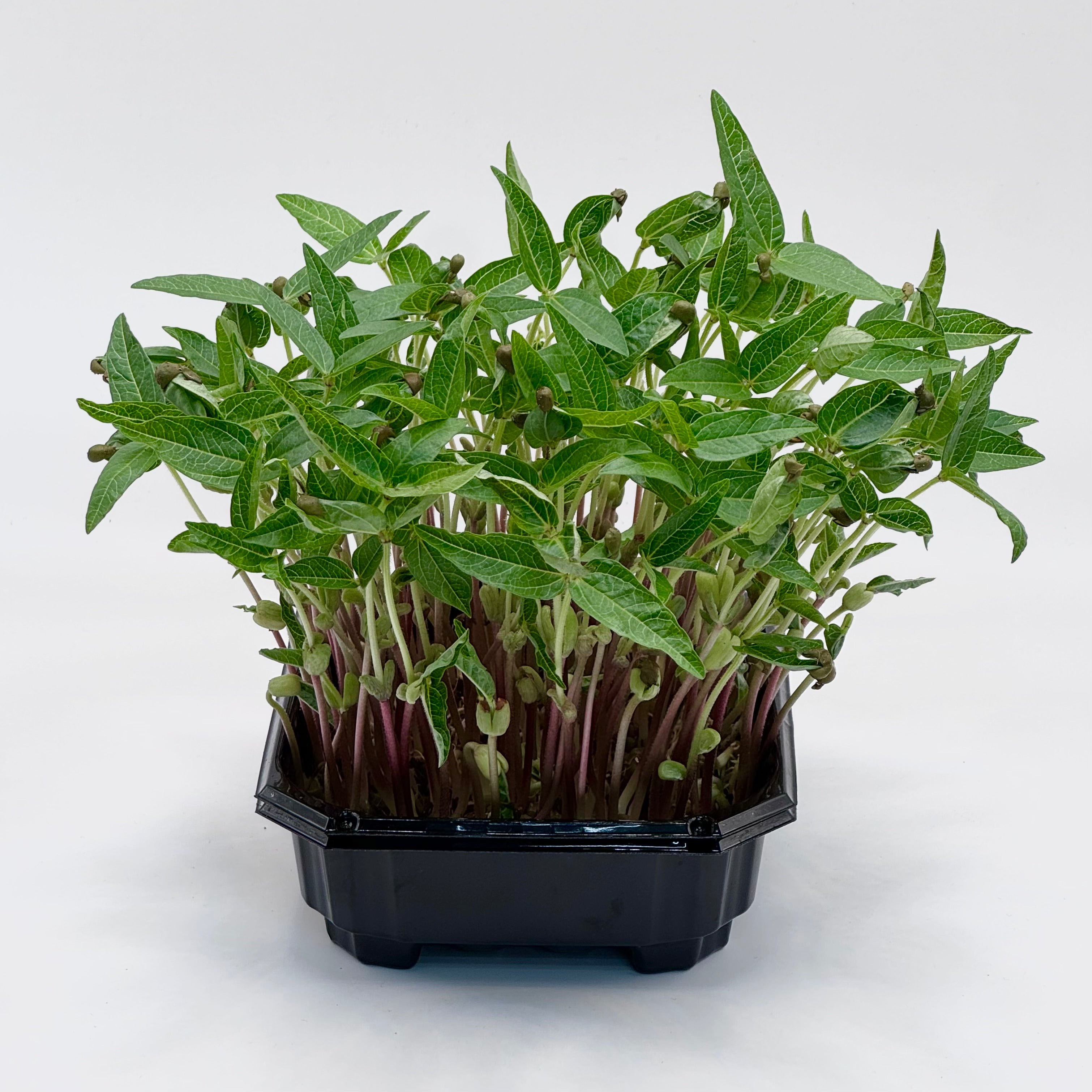
| Stem/Leaf Color | Stout pale-cream to white stems with small bright-green cotyledon leaves; very juicy |
| Flavor & Texture | Mild, sweet legume flavour with a clean fresh-bean note; crisp and juicy bite |
| Seed Count per 10g | ≈130–220 seeds (≈13–22/g depending on seed lot and variety) |
Cultivation Data
| Difficulty | Easy to moderate (watch moisture and airflow carefully) |
| Preferred Medium | Soil or coco coir; firm seed-to-medium contact essential |
| Seeding Density (1020 tray) | 150–200 g per 1020 tray (25×50 cm); 200 g for commercial/dense production |
| Seeding Density (10x10 cm) | 12–16 g per 10×10 cm |
| Expected Yield | ≈600 g per 1020 tray (approx. 2.5×–3.5× seed weight) |
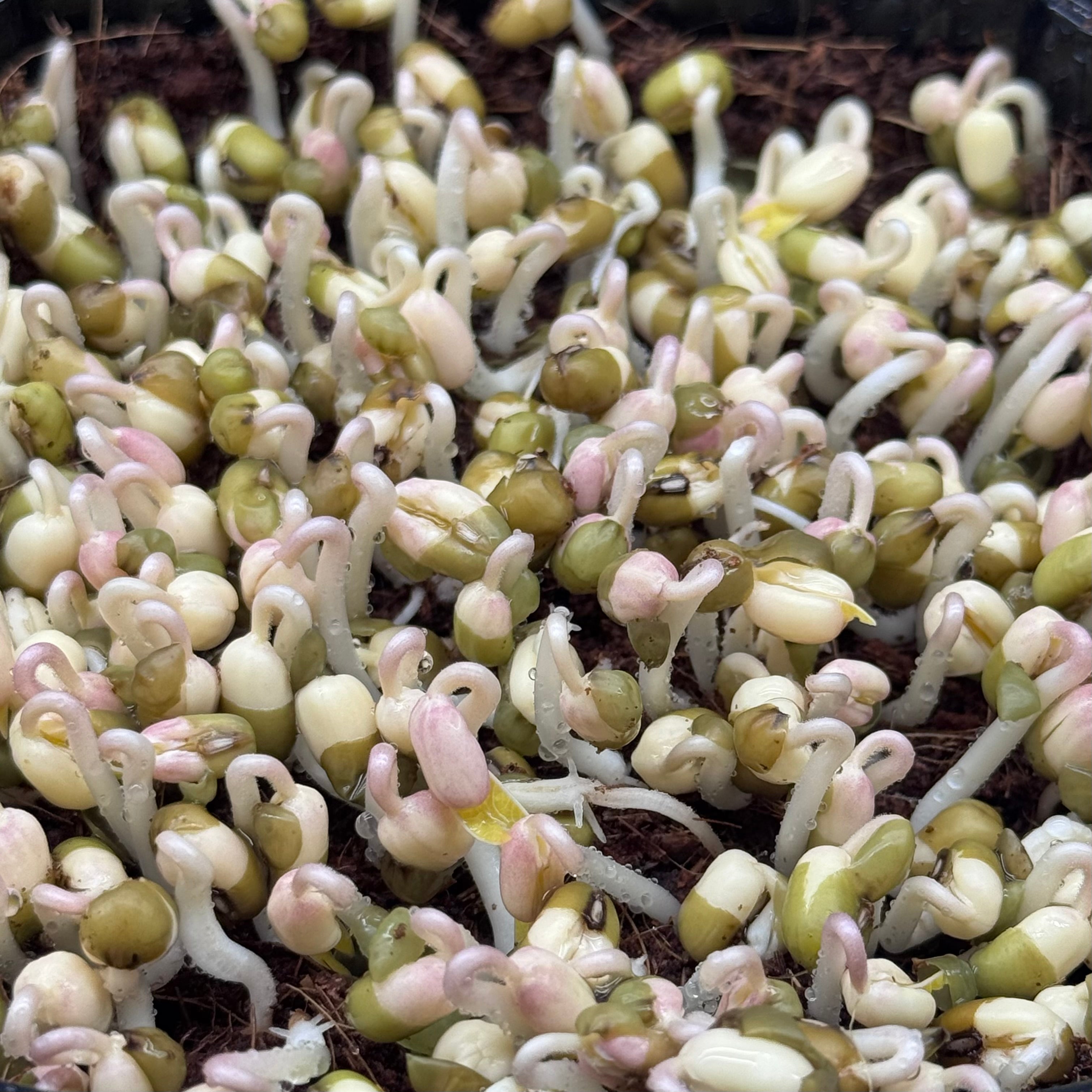
| Soaking | Yes: 8–12 h in cool water; rinse and drain very thoroughly before sowing |
| Blackout Days | 3–4 days stacked with light weight |
| Watering, pH & Temp | Bottom-watering preferred; keep evenly moist, never soggy. pH 6.0–6.5. Temperature 18–22 °C with steady airflow |
| Sprouting Time | 2–3 days after soak |
| Harvest Time | 8–12 days from sowing |
Health & Nutrition
| Vitamins | Vitamin C (ascorbic acid, elevated vs. sprouts), folate (B9), B1, B2, B3, B6; vitamin A (beta-carotene); small amounts of vitamin K |
| Minerals | Potassium, magnesium, iron, calcium (elevated in microgreens vs. sprouts), zinc, manganese, phosphorus |
| Notable Compounds | Plant protein and dietary fiber (nearly double that of sprouts on a fresh-weight basis); polyphenols and phenolic acids; resistant starch; oligosaccharides with prebiotic activity; enzyme inhibitors reduced by germination, improving bioavailability |
| Health Benefits | Supports metabolic wellness and satiety through protein and fiber content; antioxidant activity via polyphenols and ascorbic acid; supports digestive health through prebiotic oligosaccharides and improved nutrient bioavailability; gentle on digestion compared to mature beans |
ABOUT
Mung bean microgreens are the grown-up version of the humble bean sprout — stout, pale shoots topped with small vivid-green cotyledon leaves that snap with a clean, juicy crunch when you bite through them. The flavour is delicately sweet with that characteristic fresh-legume earthiness: gentle enough to eat by the handful yet distinctive enough to anchor a Vietnamese-style noodle bowl or a quick wok stir-fry. Unlike most microgreens, they develop real substance and weight, meaning a single tray can yield a generous harvest that feels like proper food rather than a garnish. With seeds that swell visibly overnight and shoots that push through the soil within days, this is one of the most rewarding crops to watch grow — and right now is the perfect time to start your first tray.
GROWING INSTRUCTIONS
Why Choose Deliseeds?
-
Untreated & Non-GMO, Conventional or Organic Safe, high-germination seeds. We also offer wide selection of certified organic seeds.
-
Fast EU Shipping
Orders dispatched within 24h. Delivery times 1-5 working days.
-
100% Satisfaction Guarantee
If you're not satisfied - you'll get a replacement or a refund.
-
Expert Support
We mean it! You get our personnal support to help you succeed.