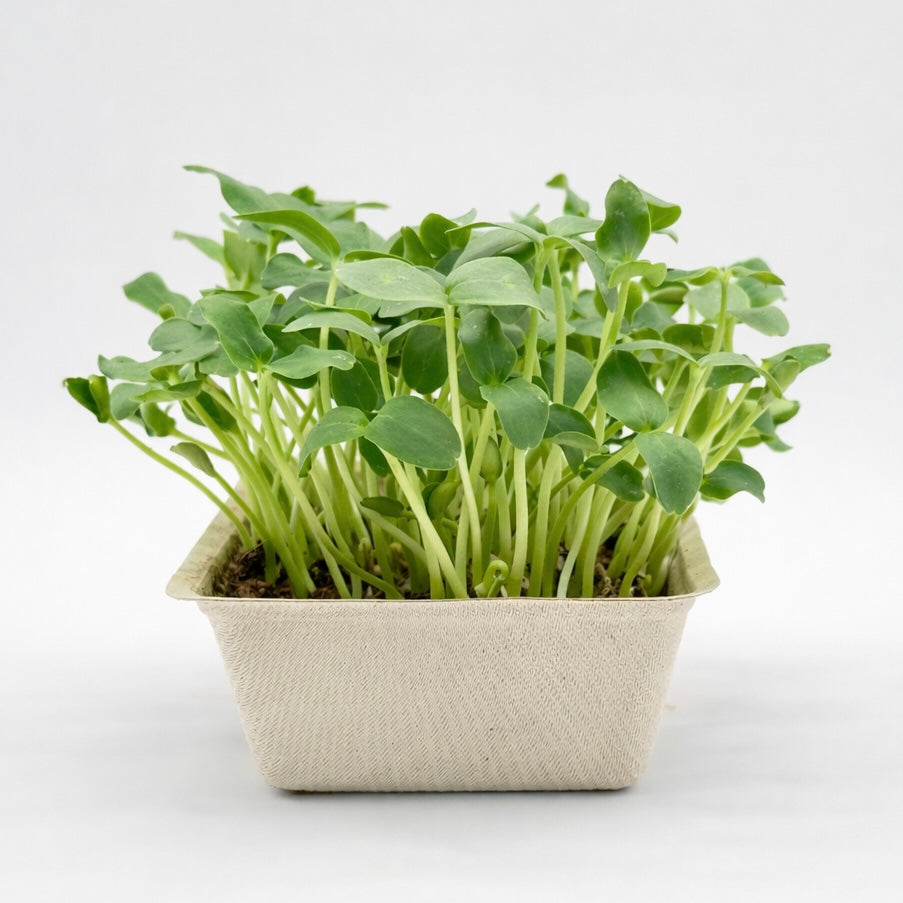


Details
Melon Cantaloupe Microgreens offer a refined and unexpected flavor experience, combining delicate sweetness with a fresh, aromatic finish. Grown as microgreens, they deliver a unique visual and culinary accent, highly valued in modern and fine-dining cuisine. Carefully selected for uniform germination and high quality, these seeds are intended exclusively for microgreens cultivation, ensuring consistent results and exceptional freshness in every harvest.
FULL SPECIFICATION TABLE
General information
| Common Name | Melon Cantaloupe microgreens |
| Botanical Name | Cucumis melo |
| Seed Type | Conventional, untreated, non-GMO |
| Stem/Leaf Color | Pale, succulent stems with fresh green leaves. |
| Flavor & Texture | Fresh melon‑cucumber notes; crisp and juicy. |
| Seed Count per 10g | ≈300–400 seeds (≈30–40/g). |
Cultivation data
| Difficulty | Moderate (watch moisture and damping‑off). |
| Preferred Medium | Soil or coco coir; steady airflow. |
| Seeding Density (1020 tray) | 60 g |
| Seeding Density (10x10 cm) | 4.65 g |
| Expected Yield | ≈300 g per 1020 tray (4×–6×). |
| Soaking | No (optional brief 2–4 h). |
| Blackout Days | 3–4 days. |
| Watering, pH & Temp | Keep medium evenly moist (prefer bottom watering). pH 6.0–6.5. Temperature 18–22 °C. Ensure good airflow after germination. |
| Sprouting Time | 3–4 days. |
| Harvest Time | 8–12 days. |
Health and nutrition facts
| Vitamins | A (β‑carotene) & C; small K. |
| Minerals | Potassium, magnesium. |
| Notable Compounds | Carotenoids, polyphenols; hydrating flesh. |
| Health Benefits | Supports immune function and antioxidant defenses; refreshing, hydrating greens. |
ABOUT
What are Melon Cantaloupe microgreens?
Meet the melon microgreen: If you didn't know melons could be microgreens, you're in for a delightful surprise. Cantaloupe microgreens come from the same seeds that grow cantaloupe or muskmelon fruit. When grown as microgreens, they yield small, heart-shaped cotyledon leaves on thin stems, often a pale green color. These shoots are mildly sweet and truly carry a hint of melon essence. Imagine the refreshing taste of a cantaloupe - now imagine that in a tender green shoot! That's exactly what these microgreens offer: a gentle sweetness with a melony, cucumber-like flavor that is very refreshing. Unlike many greens, they have almost no pepperiness or bitterness. Instead, you get a subtle fruity note that's unique among micro veggies. The texture is also notable - melon microgreens are succulent and crisp, making them a pleasure to munch on. They don't have the hard seed shell attached (the shell usually falls off as they grow), so you mostly get the pure green shoot. These are definitely conversation-starter microgreens because of their unusual provenance and taste.
Culinary uses: Melon cantaloupe microgreens can be used in both sweet and savory contexts, thanks to their sweet, mild flavor. In salads, they pair beautifully with fruits and vinaigrettes - think a summer salad of watermelon, feta cheese, and a handful of melon microgreens on top. Their slight sweetness also complements spicy and tangy flavors, so try them with a drizzle of balsamic or a squeeze of lemon. Because they are tender, you can use them generously like a salad green or as a bed for appetizers. Beverages & desserts: One fantastic use is as a fresh garnish for drinks - float some melon microgreens in cocktails, lemonades, or even on a fruit smoothie bowl for visual appeal and a hint of flavor. They make an unexpected yet fitting topping on chilled desserts like sorbet, ice cream, or panna cotta. Chefs in high-end restaurants have used popcorn shoots in cocktails; similarly, these melon shoots could elevate a signature drink with their sweetness. Savory dishes: Don't hesitate to use them on savory plates as well. They can adorn cold soups (imagine a minty cucumber gazpacho with melon micros on top) or grilled fish, where their sweetness can balance salty or smoky elements. They are also fantastic on bruschetta or tacos where a touch of sweetness can round out flavors. Another idea: use them in sandwiches or wraps that include ingredients like prosciutto or cheese - the sweet greens contrast nicely with salty, cured meats or creamy cheeses. Since melon microgreens are quite delicate, it's best to add them at the very end of preparation (they will wilt if cooked or left on hot food too long). Use scissors to snip them onto the dish just before serving. A little goes a long way in terms of visual appeal - their bright green leaves make any dish look like a gourmet creation. Culinary creativity: Some people even juice or blend these microgreens into smoothies for added nutrients and a hint of sweetness. However, to really appreciate their flavor, eating them raw as a garnish or salad component is ideal. They truly shine in summer-themed dishes, complementing ingredients like citrus, berries, cucumber, mint, and soft cheeses.
Health benefits: Cantaloupe is known for being nutrient-rich, and the microgreens carry a similar profile in concentrated form. Melon microgreens are particularly high in vitamin A (as carotenoids) which is crucial for vision, immune defense, and skin health. Their green color indicates presence of beta-carotene (like their orange flesh cousins), an antioxidant. They also provide a good dose of vitamin C, which supports the immune system, collagen production, and acts as an antioxidant. Being rich in both A and C makes them a skin-friendly food (hence the "glowing skin" claims by some sources). Vitamin E and K are also present, contributing to heart health and bone health respectively. In terms of minerals, melon micros supply calcium (for bones), iron (for preventing anemia), and magnesium among others. They also have a notable fiber content for a microgreen, aiding digestion and providing prebiotic benefits. One unique aspect is their high water content - melon microgreens, like the fruit, can help with hydration (they're crisp and juicy). Eating them adds to your fluid intake in a natural way. The combination of potassium and magnesium in these micros supports healthy blood pressure and muscle function. Also, these microgreens are very low-calorie, yet they contain beneficial phytonutrients like polyphenols. For example, cantaloupe contains cucurbitacins and other compounds; as microgreens, some of those antioxidants are likely present and potentially even more concentrated as in many microgreens. Some studies have shown microgreens can have significantly higher nutrient levels than mature plants - while specific data on melon micros is limited, it's reasonable to expect a higher density of vitamins per gram compared to the fully grown melon flesh. All in all, adding melon microgreens to your diet gives you vitamins and antioxidants akin to fruits, but in a leafy green form. It's a fun way to get some extra nutrients, especially for those who may not eat enough fruit. Plus, their sweet taste might encourage kids or picky eaters to enjoy greens more.
Growing quality & notes: Melon microgreens (cantaloupe variety) come from muskmelon seeds. These seeds are larger than typical microgreen seeds and have a hard coat. Our seeds are high-germination and open-pollinated (often heirloom melon varieties). It's recommended to soak melon seeds for a few hours before sowing to soften the hull - this can speed up germination and increase success. After sowing, melon seeds prefer a warm and humid germination phase. You might notice that melon seeds, like other squash family seeds, can be prone to a bit of surface mold if conditions aren't right. We take care in sourcing clean seeds, but you should also sow somewhat thinly and ensure airflow after germination to avoid any fuzz. Typically, melon microgreens are easy and uniform growers - they tend to all pop up around the same time and reach harvest together, which is nice. They have a bit of a different look compared to other micros (broader cotyledons). The resulting microgreens are uniform in height and have a relatively long shelf life after cutting (they're not as delicate as, say, cress). In fact, because they are succulent, they stay plump longer when stored. Our melon seeds are untreated and non-GMO, safe for microgreen use. With proper care, you'll see a near 100% germination and a lush tray of sweet shoots. One thing to remember: melon microgreens are a bit taller and more fragile in stem compared to, for example, radish. So handle them gently during harvest and washing to avoid bruising. If you give them good light, they'll develop a nice green color and strong flavor. Growing them slightly in the dark (like some do with corn shoots) is not recommended here - you want them green for full flavor (unlike popcorn shoots which are grown yellow). They are naturally not bitter even when green, so full light is fine. Summing up, our quality seeds and a little warmth are the keys to enjoying a bountiful harvest of these unique microgreens.
GROWING INSTRUCTIONS
How to grow Melon Cantaloupe microgreens?
Growing melon microgreens is fairly straightforward, similar to other large-seeded microgreens like sunflower or squash. Here's how to do it:
- Soak (Optional): Cantaloupe seeds can be soaked to improve germination. If you choose to, soak the seeds in room-temperature water for about 4-6 hours before planting. They will absorb water and this can soften the seed coat, making it easier for the sprout to emerge. If you don't soak, it's okay - just keep the soil extra moist initially. If you do soak, be sure to drain them well afterwards.
- Sowing: Fill your tray with 3-4 cm of moist potting soil or coco coir. Smooth it out gently. Spread the melon seeds evenly across the surface. Because the seeds are larger (~1 cm long), you'll visually place them rather than scatter like tiny seeds. Aim for spacing where seeds aren't overlapping - for a 10x20" tray, ~80-100 grams of seed usually gives good coverage (they will all put up sizable cotyledons). After placing, gently press the seeds into the soil so each has contact. Then cover the seeds with a thin layer (about 0.5 cm) of soil or vermiculite. This covering is helpful: it keeps seeds moist and dark, and as the seedlings push up, the friction helps remove the seed hulls.
- Germination (Blackout): After sowing and covering, mist the top layer of soil to ensure everything is damp. Cover the tray with a lid or another tray to create darkness. Keep the tray in a warm place, ideally around 24-27°C, as melons love warmth for germination. In ~2 days, start checking: you should see white stems or pale sprouts beginning to push up and maybe lifting the soil layer. Usually by day 3, many will be germinated. If some seed hulls are clinging, you can very gently rub the top or mist to help loosen the soil on top. Keep them in blackout for maybe a total of 3 days - once the majority have sprouted and are pushing against the cover, it's time for light. Note: too long in the dark can cause them to stretch excessively, so don't overshoot the blackout period.
- Light Phase: Uncover the tray and move it to a light source. Melon microgreens grow uniformly in soil and love light. Provide them with plenty of light - either a bright windowsill (they do enjoy sun, but introduce gradually to avoid drying out) or fluorescent/LED grow lights for ~12-16 hours a day. Under light, the yellowish sprouts will turn green and the leaves will expand. Ensure good airflow now; melon sprouts are fleshy and can be susceptible to damping-off if air is stagnant. A fan in the room or leaving some space between trays helps. Maintain temperature around 20-25°C for steady growth.
- Watering: Melon microgreens have a moderate water requirement. Their thick stems and leaves hold water, but also you don't want them to dry too much or they'll wilt quickly. Use a bottom watering method if possible: pour water into the undertray so the soil can soak it up. This keeps the leaves dry and prevents rot. Check daily - if the soil feels just barely damp or dry to touch, add water. They likely will need watering every 1-2 days depending on humidity and temperature. Be careful not to overwater; soggy conditions can promote mold on those large seed hulls. If you ever see a fuzzy white mold on any leftover seed hulls, you can remove that hull or dab with a bit of vinegar or peroxide on it. Adequate airflow and not overwatering are the best prevention. Typically, though, melon microgreens are easy growers with minimal issues.
- Harvesting: By day 8 to 10, your melon microgreens should be about 5-8 cm tall and ready to harvest. Look for well-developed cotyledons (they look like small pairs of leaves) that are a vibrant green. Importantly, they should have a pleasant melon-y scent when rubbed. Harvest before any true leaves start to appear (true leaves in the cucurbit family can be prickly or bitter). Use a sharp knife or scissors to cut the microgreens just above the soil surface. Because these micros are a bit sturdy, you can harvest in clusters or sections. Gently gather a bunch and cut - careful not to pull, as that might bring up soil. After cutting, you may notice some seed husks still attached to lower stems - just flick those off; by harvest time most husks drop away. Give the harvested greens a rinse in cold water to remove any soil particles or hulls. Then drain them well on paper towels or a salad spinner. They're now ready to use. If not using immediately, store them in a covered container in the refrigerator. They should stay fresh about a week (some say even up to 10 days) if kept dry and cool - melon micros store a bit better than many other micros due to their thicker leaves. However, for peak sweetness and crunch, consuming them within a few days is best.
Tip - Hull Removal: If some seed hulls are stubbornly stuck to the leaves even at harvest (it can happen with a few seeds), you have a couple of options. You can try to gently remove them by hand - the leaves of melon micros are fairly resilient and won't tear too easily. Or, use the "water rinse" method: place the cut microgreens in a bowl of cool water and swirl them; many hulls will float to the top or sink, separating from the greens. Then skim out the greens. This works because hulls are heavier and the agitation knocks them off. Just be sure to dry the greens thoroughly after. Having covered the seeds with soil during sowing usually minimizes this issue, but a few hulls per tray is normal.
Melon Cantaloupe microgreens - tips & troubleshooting
My melon microgreens have a few fuzzy white patches on the soil— is this mold? What should I do?
The flavor is nice but very mild. How can I intensify the melon flavor of these microgreens?
Do I need to peel off the seed shells from each melon sprout? Some seem stuck.
Can I grow these melon microgreens hydroponically (without soil)?
Why Choose Deliseeds?
-
Untreated & Non-GMO, Conventional or Organic Safe, high-germination seeds. We also offer wide selection of certified organic seeds.
-
Fast EU Shipping
Orders dispatched within 24h. Delivery times 1-5 working days.
-
100% Satisfaction Guarantee
If you're not satisfied - you'll get a replacement or a refund.
-
Expert Support
We mean it! You get our personnal support to help you succeed.