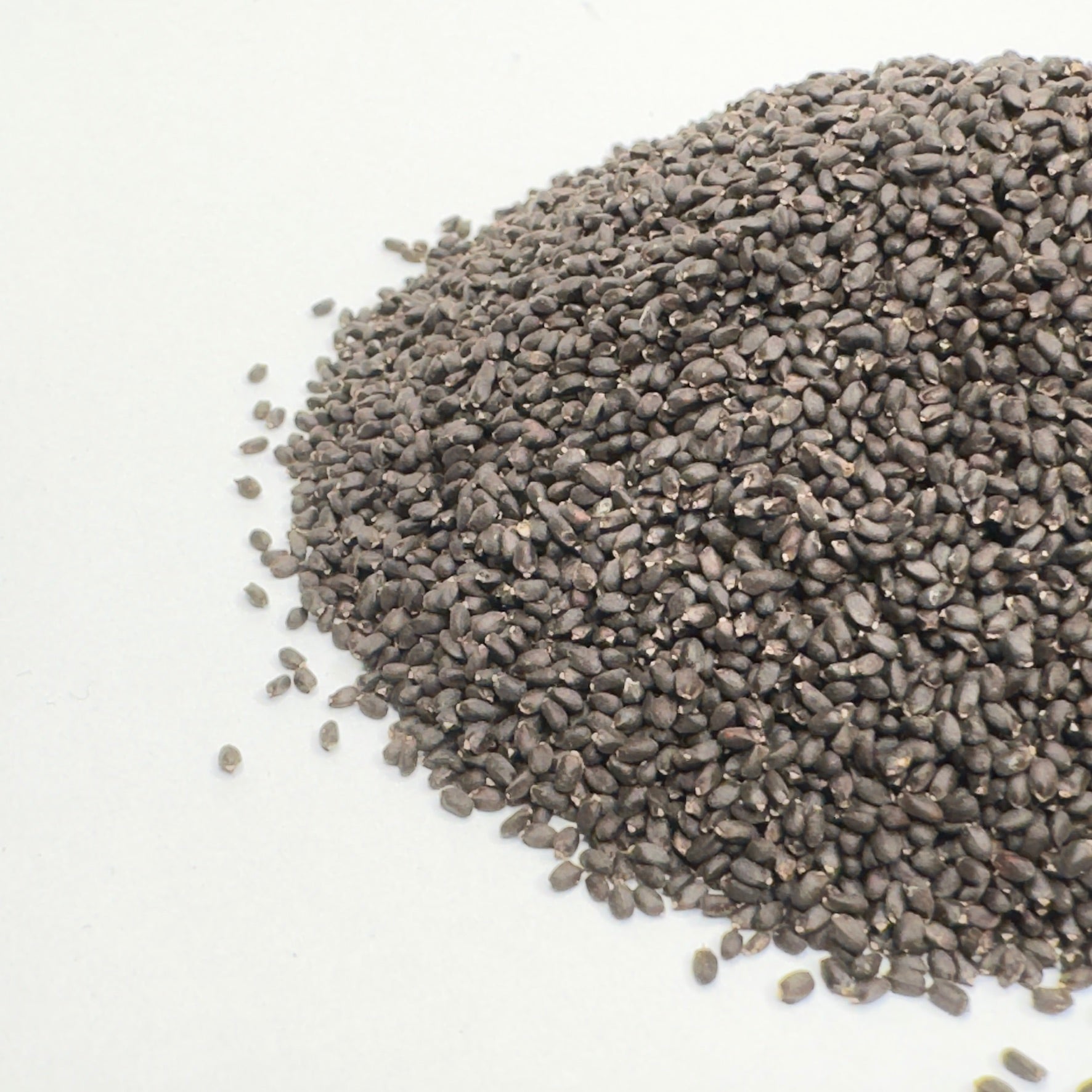

Details
Classic sweet basil as a microgreen - fragrant and soft. Top pizzas, pasta, burrata, and sandwiches.
FULL SPECIFICATION TABLE
General information
| Common Name | Green Basil microgreens |
| Botanical Name | Ocimum basilicum |
| Seed Type | Conventional, untreated, non-GMO |
| Stem/Leaf Color | Bright green stems; glossy green cotyledons and first leaves |
| Flavor & Texture | Classic sweet basil; soft, aromatic leaves |
| Seed Count per 10g | ~6,200 seeds (≈620/g) |
Cultivation data
| Difficulty | Medium (likes warmth) |
| Preferred Medium | Soil or coco; avoid overwatering (mucilaginous seed) |
| Seeding Density (1020 tray) | 6.5 g |
| Seeding Density (10x10 cm) | 0.5 g |
| Expected Yield | ≈200–220 g per 1020 tray (first true leaf) |
| Soaking | No (mucilaginous) |
| Blackout Days | 5–6 days |
| Watering, pH & Temp | Bottom water; pH ~6.0–6.5; 20–24 °C; strong light |
| Sprouting Time | 6–8 days |
| Harvest Time | 14–15 days |
Health and nutrition facts
| Vitamins | Vitamin K; vitamin A precursors; vitamin C |
| Minerals | Calcium, iron, manganese |
| Notable Compounds | Essential oils (linalool, eugenol), polyphenols |
| Health Benefits | Vitamins K, A & C — support normal blood clotting, immune function, and antioxidant defenses; essential oils (linalool, eugenol) may support calm and digestion. |
ABOUT
What are Green Basil microgreens?
Green basil microgreens are essentially tiny versions of the sweet basil (Ocimum basilicum) used in Italian cuisine (often Genovese basil). They pack all the beloved qualities of basil into a smaller form. Aroma is a big part of basil, and you'll notice that even a small tray of micro basil gives off that wonderful scent of clove and pepper with sweet undertones. Many describe micro basil as "basil on steroids" in terms of flavor intensity - because in each bite you have a higher concentration of those essential oils relative to volume. In fact, chefs and foodies often note that basil microgreens deliver a burst of flavor that can surpass that of a torn large basil leaf.
The microgreen's appearance: two initial leaves (which are somewhat spoon-shaped) that are a vibrant medium green, often slightly shiny. As they mature, they may develop a second set of true leaves that look like miniature basil leaves with a bit of veining. They generally don't get huge - at harvest, each plant might have 2-4 leaves total (depending on how long you let them go). They have thin, square stems (basil stems are slightly square in cross-section, a sign of the mint family). They are tender, with none of the woody quality that older basil stems can have, so you can eat the whole microgreen without picking leaves off.
Culinary Uses: Basil microgreens shine wherever fresh basil does. They're fantastic as a fresh sprinkle over tomato-based dishes - e.g., spaghetti marinara topped with micro basil, or a margarita pizza with micro basil instead of torn basil leaves provides more uniform coverage and a great look. They also make for beautiful garnishes on appetizers and canapés: envision a small crostini with mozzarella, a cherry tomato half, and a tuft of micro basil - essentially a mini caprese on each toast. Micro basil can indeed be made into pesto - you would need a good volume (a tray or two yields a small batch of pesto), but the flavor will be very bright green and powerful. One could also combine micro basil with pine nuts, garlic, and olive oil for a quick pistou style sauce (no cheese necessary for a lighter version). Because they're clean and tender, some innovative uses include blending them into basil oil or basil syrup for cocktails or desserts. For instance, you can muddle micro basil in a gin cocktail for a fragrant twist. On the sweet side, basil pairs with fruits like strawberry, lemon, watermelon - try micro basil as a garnish on strawberry shortcake or watermelon feta salad. The advantage of micro basil is there's no chopping needed - the small leaves can be used whole, saving time and reducing oxidation (chopping basil can bruise it and make it dark). Also, micro basil doesn't blacken as quickly as cut basil leaves do, since you often use them whole and fresh. If you're a fan of Thai or Vietnamese cuisine, note that sweet basil microgreens are more like Italian basil, not Thai basil which has an anise flavor - but you can still toss micro basil on a pho or spring roll for a milder basil note. They won't replace the exact flavor of Thai basil but bring a similar herbal freshness.
One note: Basil microgreens are delicate. They will wilt or turn brownish if exposed to high heat. So always add them at the very end of cooking or to plated food. If you stir them into hot soup and let sit, they'll lose color (just like basil leaves would). Use as a finishing herb for best results.
Nutrition and Health: Basil isn't eaten for sustenance largely, but it has some nifty benefits. Basil microgreens in particular contain a lot of vitamin K (basil leaves are high in K1, important for blood clotting and bone health) - a handful could give a significant portion of daily K. They also have vitamin A (from carotenoids like beta-carotene and lutein, good for eyesight) and vitamin C (though not as high as sorrel or cress, but still some). Basil's essential oils (e.g., eugenol, which gives that clove smell) have been studied for anti-inflammatory effects - they can help reduce swelling and act as a mild antiseptic. Linalool, another compound, is known for stress relief and mood enhancement (it's aromatic therapy - smelling basil can actually help you relax). Traditionally, basil has been used for digestive support - it can help with bloating or stomach cramps. Microgreens retain all these oils because you consume them raw and fresh. Some studies on microgreens found that herb microgreens can have equal or higher polyphenol content than older herbs due to rapid initial growth. Basil also contains magnesium and calcium, plus some iron - beneficial for muscle and blood function. And of course, the act of eating more herbs and greens in place of salt or sugar-laden ingredients is a health win. Micro basil could help reduce the need for heavy dressings or salt because it imparts so much flavor.
One caution: Basil (like many herbs) has a lot of vitamin K, so individuals on blood-thinning medication like warfarin should consume consistent, moderate amounts of high-K foods and not suddenly binge (this is more relevant if someone were drinking kale smoothies daily - a sprinkle of basil microgreens is fine, but worth mentioning in context of diet interactions). For most, it's purely beneficial.
GROWING INSTRUCTIONS
How to grow Green Basil microgreens?
Growing basil microgreens is unique due to the mucilaginous seeds. Basil seeds form a gel when wet, so special care is needed in sowing and watering.
- Sowing (on Soil or Hydroponic Mat): Basil microgreens can be grown on soil or on hydroponic pads. Soil often yields better because it handles moisture fluctuations. Fill your tray with a fine, moist potting mix. Smooth it out. Sprinkle the basil seeds evenly on the surface - they're tiny (like coarse sand). Aim for about 5 grams per 10x20 tray if you want a full dense crop; they are small so they won't overcrowd easily. Key tip: do not cover basil seeds with soil - they prefer light for germination and covering can cause uneven sprouting. Instead, after sprinkling, use a mist sprayer to thoroughly wet the seeds and soil surface. Within minutes, you'll see the seeds develop clear gel halos. This is normal.
- Germination & Blackout: Basil seeds actually germinate better with some light, so you don't need a strict dark period. However, many growers still cover them for 1-2 days just to maintain humidity, then expose to light. You can try either: Option A - cover tray with a humidity lid (clear dome) so they get diffused light but stay moist. Option B - cover with an opaque lid for 2 days, then uncover to light. Basil usually sprouts in 2-4 days readily at warm temps (around 22-26°C). They like warmth since basil is a tropical plant. If your environment is cooler (below 20°C), germination may take a bit longer and be less uniform. The gel around seeds actually helps keep them in place and moist, so avoid disturbing them. Do not stack trays on basil (like you might for sunflower) - the seeds would stick and you'll have a mess. If using a clear dome, that often provides enough humidity to not require complete darkness. You might see tiny white roots poking and then green sprouts by day 3. Important: Basil's gel can sometimes be mistaken for mold by newbies - it's not mold if it's clear and directly around the seed. Real mold might appear fuzzy away from seeds. Keeping air circulation even in germination (briefly lifting lid daily) can prevent mold, as can not oversowing. Basil's gel ironically can inhibit mold since it's a protective coat.
- Light Phase: Once the majority of seeds have sprouted (cotyledons emerging) - typically by day 4 or 5 - ensure they are under good light. Basil absolutely loves light; strong light will make them grow robust and flavorful. Provide at least 12 hours of light, 16 is fine (can even do 18 hours on, 6 off). Use grow lights or a sunny window. However, avoid intense direct sun + heat that could dry them out too fast - their small size can make them prone to wilting if you miss a watering in hot sun. Indoors under LEDs ~4-6 inches above is great. Temperature: keep it warm (they thrive around 24°C). If it dips too cold (<15°C), basil micros may grow very slowly or get pale. Watering Basil micros: This is the tricky part. Because of the mucilage, avoid watering from above once they've gelled - water lightly at soil level or bottom-water. Spraying overhead can create a gooey mess and can dislodge seeds once sprouted. Best approach: after initial misting to germinate, switch to bottom watering: add water to a bottom tray and let the soil soak it up. Basil microgreens prefer evenly moist soil, but not waterlogged. The gel helps them initially, but as plants grow, they still need steady moisture. Check daily - if top soil is drying, add a bit water below. Basil is somewhat susceptible to damping off if too wet with no airflow, so don't saturate constantly. Good airflow (a fan) is recommended once they're growing to keep stems dry and strong.
- Growth and Challenges: Basil microgreens start by showing two bright green smooth cotyledons. They might stay at that stage for a bit. Then around day 10-14, you may see the first true basil leaves emerging in the center (tiny and sometimes slightly serrated). You can harvest at cotyledon stage (~10 days) for a milder flavor or wait till some true leaves for a stronger flavor. Many prefer to wait ~14-20 days for richer aroma. One known issue: Basil seedlings sometimes have the seed coat stick to the cotyledons (like little black/brown caps) - this happens if the humidity drops too quickly after germination. To remedy it, you can gently mist the tops if you see many seed coats still attached by day 4-5, then cover a bit longer. Or physically remove them with tweezers if they're really stuck and the leaf is trying to open. Usually they fall off, but keep an eye. Another known challenge: Basil can be prone to damping off (stems rotting at base) if too wet and crowded. You'll see seedlings topple and a brown stem at soil. Prevent this by not over-watering, spacing seeds reasonably (not clumping too much), and ensuring airflow. Some growers even thin them a bit if they see overcrowding in one spot. Also, do not keep them in blackout too long - they need light early to avoid weak, tall stems that collapse. Basil micros are "slightly finicky" seeds, but with these precautions, you'll be fine.
- Harvest: Typically 14-20 days after sowing is prime harvest time. At this point, the microgreens are about 3-5 cm tall. They should have a pair of well-formed cotyledons and perhaps the start of true leaves. You'll smell a strong basil aroma when you move the tray. Use sharp scissors or a knife to cut just above soil level. Basil microgreens can be a bit delicate, so handle gently - try not to crush or bruise them during harvest. Harvest in a cool time of day; basil can wilt quickly if it's warm. If you cut and they seem a bit limp, immediately misting them with cold water or dunking briefly and then patting dry can crisp them up, or just placing in the fridge will perk them up. One great thing: Basil microgreens do not have any coarse stems - you can use them whole without chopping.
- Yield: Basil seeds are small so you can sow a lot, but they also have a lot of stem relative to leaf at micro stage. Expect maybe 50-100 grams from a 10x20 tray depending on density - not as heavy as some micros, but enough to top many dishes. If aiming to make pesto, you'd need multiple trays. So micro basil is often used more for garnish and finishing, not bulk leafy greens (though a microgreen salad with basil would be delicious mixed in).
Post-harvest: Basil microgreens store moderately well. They don't love being very cold or very wet. Ideally, store them around 5-10°C if possible (home fridges are ~4°C, which can be okay but basil can get black spots if too cold for long). But realistically, you'll refrigerate them. Put in a breathable container (or one with a paper towel to buffer moisture). They should last 5-7 days refrigerated, but often the flavor/aroma is best in first 3 days. You might notice the stems start to darken or leaves get spotty after a week - that's them degrading. Best to consume quickly, as with any herb. If you need to revive slightly limp micros, you can place their stems in ice water for a minute then pat dry - they'll absorb some water and perk up (similar to putting cut herbs in water). Only do that right before use.
Green Basil microgreens - tips & troubleshooting
My basil microgreen seeds got a white fuzzy coating – is this mold or normal?
The basil seedlings look yellowish even after a couple days in light. How do I get them green?
My basil microgreens have a lot of tiny black seed husks on them. How to deal with that?
The stems of my basil micros turned dark/brown and they flopped over – what happened?
Can I get a second cut from basil microgreens?
Why Choose Deliseeds?
-
Untreated & Non-GMO, Conventional or Organic Safe, high-germination seeds. We also offer wide selection of certified organic seeds.
-
Fast EU Shipping
Orders dispatched within 24h. Delivery times 1-5 working days.
-
100% Satisfaction Guarantee
If you're not satisfied - you'll get a replacement or a refund.
-
Expert Support
We mean it! You get our personnal support to help you succeed.