
Trigonella foenum graecum

Fenugreek - microgreens seeds

✨Aromatic fenugreek shoots with a gentle maple‑like note—great in Indian, Middle‑Eastern and fusion dishes.

Priority dispatch within 2 working days · Full tracking included

Regular price
13,00 zł
Regular price
Sale price
13,00 zł
Tax included.

    Germination: Fast sprouter – germinates in about 2–3 days, and microgreens are ready to harvest in 7–10 days. Seeds require pre-soaking (6–8 hours) to boost uniform sprouting. Grows densely and uniformly with minimal effort.

    Flavor: Unique herb flavor with a maple-like aroma and mild bitterness. Tastes like a cross between celery and maple syrup, with curry/spice notes – essentially the fresh “methi” flavor beloved in Indian cuisine. Great for adding an earthy, slightly sweet complexity to dishes.

    Nutrition: Powerhouse microgreen – rich in iron, magnesium, calcium, and vitamins A, B-complex, C, and K. Contains antioxidants and saponins that support immunity and health. Traditionally used to aid digestion and balance blood sugar; remarkably, studies found fenugreek microgreens can improve cellular glucose uptake by 25–44%, highlighting their anti-diabetic potential. High in protein and fiber for a plant this size, promoting fullness and digestive health.

    Cultivation: Easy and vigorous grower – fenugreek (methi) microgreens thrive in warm conditions and don’t need special light (moderate light is fine). They grow thick and uniform, making them ideal for both home and market growers. The seeds are large, so a thin layer of soil over them can improve results.

    100% satisfaction guarantee

    Your satisfaction is our top priority.

    If something's not right, we’ll make it right — whether that means replacing your item or giving you a full refund. No fuss, no hassle.

    SHIPPING INFORMATION

    Shipping cost is based on weight and destination. Just add products to your cart and use the Shipping Calculator to see the shipping price.
    Fenugreek - microgreens seeds

    Details

    FULL SPECIFICATION TABLE

    General information

    Common Name Fenugreek microgreens
    Botanical Name Trigonella foenum‑graecum
    Seed Type Conventional, untreated, non-GMO
    Stem/Leaf Color Sturdy pale stems; aromatic green leaves.
    Flavor & Texture Savory‑maple aroma; tender, juicy stems.
    Seed Count per 10g ≈600–700 seeds (≈60–70/g).

    Cultivation data

    Difficulty Easy to moderate (watch moisture).
    Preferred Medium Soil or coco; firm seed‑to‑soil contact.
    Seeding Density (1020 tray) 80 g
    Seeding Density (10x10 cm) 6.2 g
    Expected Yield ≈480 g per 1020 tray (5×–7×).
    Soaking Optional 6–8 h; drain well.
    Blackout Days 3–4 days.
    Watering, pH & Temp Keep medium evenly moist, not soggy. pH 6.0–6.5. 18–22 °C; good airflow.
    Sprouting Time 3–4 days.
    Harvest Time 10–12 days.

    Health and nutrition facts

    Vitamins C, K; small amounts of A & B‑vitamins.
    Minerals Iron, manganese, magnesium, potassium.
    Notable Compounds Saponins, 4‑hydroxyisoleucine, flavonoids, fiber.
    Health Benefits Supports antioxidant defenses and metabolic wellness; fiber supports normal digestion.
    ABOUT

    What are Fenugreek microgreens?

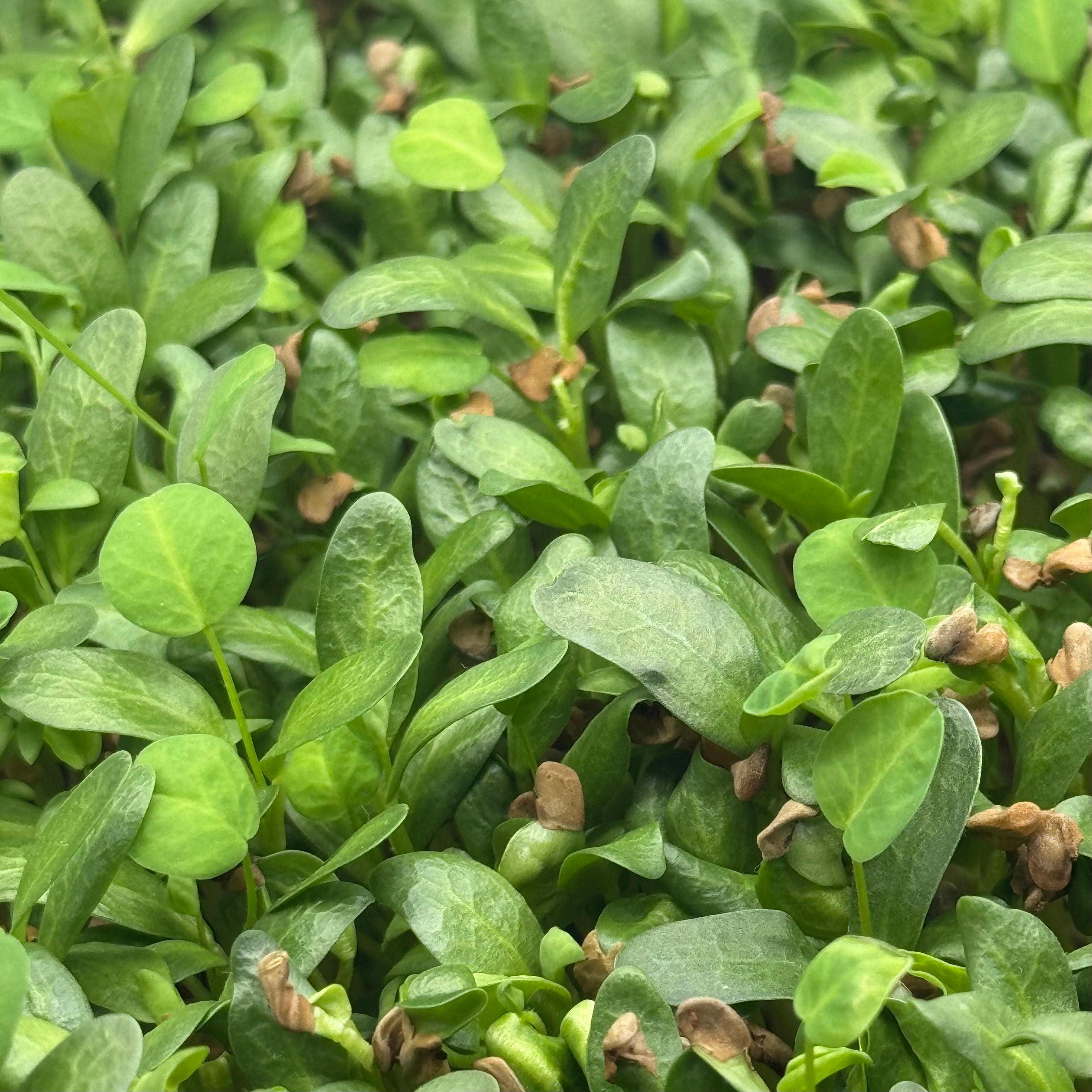
    Introducing fenugreek ("methi") greens: Fenugreek (Trigonella foenum-graecum) is a legume plant whose seeds and leaves are widely used in South Asian and Middle Eastern cooking. As microgreens, fenugreek seeds produce tender shoots about 8-12 cm tall, with two elongated green leaves (cotyledons) that sometimes have a hint of bronze hue. These microgreens are aromatic and flavorful - when you grow them, you'll notice a sweet maple syrup-like smell during germination (fenugreek seeds contain a compound used in artificial maple flavoring!). The taste of fenugreek microgreens is distinctive: slightly bitter and nutty with a sweet undertone, very much like the fresh fenugreek leaves (methi) used in Indian dishes. Some describe it as a mix of celery, fennel, and maple. The bitterness is mild at the microgreen stage - it's gentler than mature fenugreek leaves, making these micros quite palatable even raw. Fenugreek microgreens bring an intriguing depth of flavor: imagine a salad green that carries a whisper of curry-like spice and a hint of sweetness. It's no surprise they have surged in popularity among chefs and health enthusiasts.

    Culinary uses: Fenugreek microgreens are extremely versatile in the kitchen, especially if you enjoy global cuisines. In Indian cooking, fresh methi leaves are used in curries (like methi chicken, aloo methi), breads (methi paratha), and more; these microgreens can be used the same way but with no need to pick leaves off stems - you use the whole shoot. Toss a handful of fenugreek micros into lentil soups, vegetable stews, or stir-fries at the end of cooking for an instant flavor boost. They pair beautifully with curries, beans, and potatoes, adding that fenugreek aroma without overpowering. You can also use fenugreek microgreens raw in salads or sandwiches: they contribute a peppery, maple flavor that's great with citrus dressings or alongside sweet components like carrots or oranges. A popular idea is blending these microgreens into smoothies - a small amount can boost iron and help balance blood sugar while the flavor pairs well with ingredients like banana, spinach, or yogurt. Finely chopped fenugreek micros make a unique garnish on hummus, scrambled tofu/eggs, or avocado toast, providing color and a nutritional punch. Another creative use: mix them into dough or batter (for instance, fold into bread or pancake batter) to infuse a subtle savory note. Because fenugreek microgreens have slight bitterness, they shine when paired with acidic or sweet flavors. Think of a salad with apple slices, walnuts, and a honey vinaigrette - fenugreek micros would add a perfect balancing bite. Overall, use them as you would use herb microgreens: to garnish, to blend into pestos/chutneys, or to star in a salad mix. They truly bring a taste of India's methi to your plate in a quick-growing form.

    Health benefits: Fenugreek has a long history as a medicinal plant - its seeds and leaves are known for benefits like blood sugar regulation, digestive support, and even boosting milk production in nursing mothers. As microgreens, fenugreek offers a concentrated dose of those benefits. These sprouts are rich in minerals: notably iron (crucial for preventing anemia and fatigue), magnesium (for muscles and nerves), and calcium (for bones). They're also packed with vitamins A and C, which together support immune function, skin health, and vision. Vitamin K is present too, contributing to bone health and proper blood clotting. One standout aspect of fenugreek microgreens is their potential effect on blood sugar management. A scientific study found that fenugreek microgreens significantly enhanced cellular uptake of glucose (by 25-44%), indicating they could help in controlling blood sugar levels - great news for those concerned about diabetes. This effect is likely due to fenugreek's high content of soluble fiber (galactomannan) and potent antioxidants/flavonoids that improve insulin function. Additionally, these microgreens carry saponins and 4-hydroxyisoleucine (an amino acid from fenugreek) which have cholesterol-lowering and anti-diabetic properties. They also contain choline and other compounds beneficial for liver and metabolism. People often use fenugreek to aid digestion - the microgreens contain dietary fiber that can help with regularity and preventing constipation. They are also thought to have anti-inflammatory effects; traditionally, fenugreek is used to soothe stomach issues and inflammation. Moreover, fenugreek microgreens are relatively high in protein for a leafy green (fenugreek seeds are ~23% protein, and the sprouts retain some of that), making them a nice addition for those on plant-based diets. Lastly, fenugreek's antioxidants (like diosgenin and trigonelline) are being researched for heart health, cognitive benefits, and even anti-cancer potential. In summary, fenugreek microgreens are a nutrient-dense addition: they feed your body with essential micronutrients while also delivering unique phytochemicals that support metabolic health, all in a low-calorie, high-fiber package. No wonder they're considered a functional food in the microgreen world.

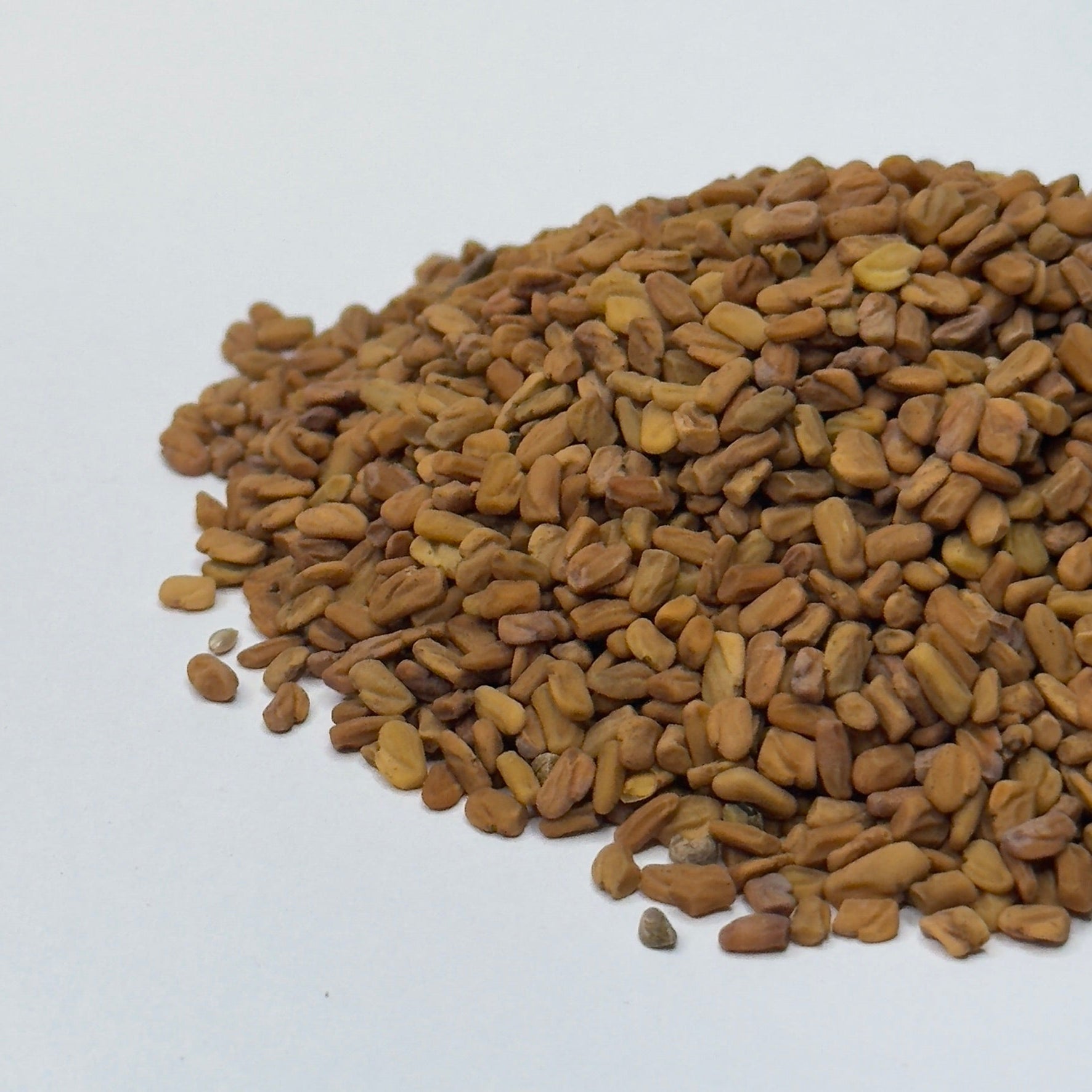
    Seed & growing quality: Fenugreek seeds are hard, yellow-brown angular seeds - for microgreens, sourcing high-quality, clean fenugreek seed is important (our seeds are food-grade, often sold for sprouting, meaning they've been tested for pathogens). They typically have very high germination rates and are easy to sprout. We recommend using organic fenugreek seeds, which are widely available, so you can be confident they're free of pesticide residues especially when growing for raw consumption. Before planting, you must soak fenugreek seeds, as they have a tough seed coat that benefits from hydration. A soak of around 8 hours (no more than 10 hours to avoid too much slime) is ideal. You'll notice the seeds swell and may just begin to sprout during the soak - that's fine. The seeds also release some mucilage when soaked, but not as much as cress or chia. Once planted, fenugreek microgreens grow vigorously. They tend to grow tall (8-12 cm) and fairly uniform. Their ideal growing temperature is on the warm side (around 21-24°C); they are originally a warm-climate plant. Unlike some microgreens, fenugreek doesn't demand extremely strong light - moderate indirect light yields lovely, tender shoots. One thing to note: fenugreek microgreens, like many legumes, can develop a slight mucilaginous residue after soaking and during germination, so ensure good airflow to prevent any odor. Our seeds are tested for a high germination percentage (often 95%+). Because fenugreek grows so fast (harvest in ~9 days on average), it usually outcompetes any issues. For commercial growers, fenugreek micros can be profitable due to their unique appeal - our seed batches come with consistent size and vigor to ensure a reliable crop each cycle.

    GROWING INSTRUCTIONS

    How to grow Fenugreek microgreens?

    Fenugreek microgreens are straightforward to grow and quite fast. They're a great choice if you want an exotic microgreen without much fuss. Here's a step-by-step:

    1. Soak Seeds: Soaking is essential for fenugreek. Rinse the seeds in cool water, then soak them in plenty of fresh water for about 6-8 hours (overnight works well). Do not exceed ~10 hours, as fenugreek seeds can become slightly slimy if over-soaked. During the soak they will roughly double in size and some may show tiny root tips. After soaking, drain and rinse the seeds thoroughly.
    2. Prepare Tray & Sowing: Fill your growing tray with 2-3 cm of moistened soil or growth medium. Fenugreek's seeds are moderately large (about 5 mm each), so you can choose to cover them lightly with soil after sowing (unlike tiny seeds, they don't mind a thin cover). Scatter the soaked seeds evenly across the surface. Aim for a dense coverage but with seeds mostly in a single layer (if they pile up, some may not sprout or could mold). For a 10x20" tray, about 100-150 grams of dry seed (which is ~200-300 ml volume) is a common sowing amount. After spreading seeds, gently press them into the soil. Optionally, sprinkle a very thin layer of soil or vermiculite on top to just barely cover the seeds - this can help retain moisture and suppress any minor mold.
    3. Initial Blackout: Cover the tray with a lid or place it in darkness for the first few days. Fenugreek seeds will start germinating quickly; you might see roots within 1-2 days. Keep the medium moist - because you pre-soaked, you shouldn't need to water immediately after planting. Check daily and mist or lightly water if the surface is drying out. During these first 3 days, it helps to maintain warmth (around 21-24°C, as fenugreek loves warmth). Some growers put a light weight on the cover to ensure good seed-to-soil contact, but it's optional since fenugreek shoots are quite sturdy. After about 2-3 days, you'll notice pale shoots pushing up (the seeds might even push the cover up, indicating strong germination). At this stage, move to light.
    4. Light & Growing On: Uncover the tray and expose the sprouts to light. Fenugreek microgreens do not require intense light - they will green up under normal room light by a window, or you can use a grow light. Provide ~12 hours of light daily. The shoots will be yellow at first; they turn bright green within a day or so of light exposure. Fenugreek tends to grow relatively tall, but keep an eye - if they start looking leggy (overly tall, thin stems bending), it might mean they need a bit more light or were left too long in the dark. Typically though, fenugreek grows upright and uniform. They also have a distinct maple syrup smell during growth - that's normal! Make sure the growing area has decent airflow, as fenugreek sprouts can have a slight wet-earth odor if too humid. A small fan or simply not crowding your trays helps. Maintain temperature in the comfortable range (they don't like cold; below 18°C can slow them).
    5. Watering: Fenugreek microgreens appreciate consistent moisture. Their root system is not very deep, so it's best to water from the bottom by adding water to a tray underneath. This prevents the foliage from getting overly wet, which can cause rot. If bottom watering isn't an option, gently water along the soil surface, avoiding pooling. They have moderately high water needs (those thick cotyledons need water to expand), so check daily - in warm conditions you may need to water every day or two. However, avoid waterlogging the soil; fenugreek seeds contain nutrients that can sour if the medium is swampy. You might see some whitish mucilage or even harmless surface yeast due to seed nutrients - if so, improve airflow and let the surface dry a bit between waterings.
    6. Harvesting: In ideal conditions, 7-10 days after sowing, your fenugreek microgreens will be ready. They typically reach about 8-12 cm tall at harvest. Look for well-developed fat cotyledon leaves that are green. You may also see the first tiny "true leaf" starting from the center; you can harvest before or just as those true leaves appear for best flavor (true leaves can be a touch more bitter). To harvest, use a clean sharp knife or scissors and cut the stems close to the soil line. Fenugreek micros are fairly succulent and easy to cut. After harvesting, rinse them in cold water, and use a salad spinner or paper towel to remove excess water. Pro tip: Harvest right before use if possible - fenugreek microgreens taste best fresh. If you need to store them, wrap them loosely in a paper towel and keep in an airtight container in the fridge; they can last about 5-6 days refrigerated, though some aroma and potency might diminish. Note that harvested fenugreek might give off a curry-like scent in your fridge (harmless, but noticeable!).

    Bonus - Second Cut?: Uniquely, fenugreek microgreens might regrow for a second cut if you leave the roots in place. Some growers have reported that fenugreek (and cilantro) micros can regenerate small shoots after the first harvest. If you want to experiment, after the first cut, keep the tray under lights and water regularly. You might get a smaller second harvest of tender true leaves in another week or so. However, the quality and flavor of regrowth may not equal the first crop, and it could be more bitter. Most often, fenugreek is grown one-and-done. Given how quick it is, you can simply compost the spent medium (fenugreek root nodules even enrich soil with nitrogen) and start a fresh batch with new seeds for continuous supply.

    Fenugreek microgreens - tips & troubleshooting

    My fenugreek microgreens have a lot of white fuzz on the seeds during germination. Is this mold?

    Likely not – fenugreek seeds, when soaked and germinating, can develop a bit of white fuzz/hair around the radicles (roots). This is often just root hairs which are the plant’s way of seeking water and nutrients. They can look like a halo of white mold, but if it’s evenly distributed on the root area and the tray smells like maple or fresh (not musty), it’s probably harmless root hairs. To be sure, you can gently touch it – root hairs will dissolve/disappear when moistened; mold will persist as fuzz. If it’s root hairs, no worries – they often appear if the seeds are slightly dry. Keep the medium moist but not sopping. If it truly is mold (patchy, spiderweb-like, with possible bad odor), then consider improving ventilation and perhaps using a hydrogen peroxide spray. However, with fenugreek’s quick growth, mold is uncommon unless seeds were not rinsed well or were sown too densely. Rinsing seeds thoroughly after soaking and using clean trays will minimize any mold risk at the outset. Also, spreading the seeds out (not clumping) and avoiding over-watering the first 2–3 days helps. So, a little white fuzz at seed base early on = usually fine (root hairs); keep an eye if it spreads or gets worse, which would indicate mold.

    The taste of my fenugreek microgreens is more bitter than I expected. How can I make them taste milder?

    Fenugreek by nature has a hint of bitterness (like its mature leaves do). That said, a few factors can increase bitterness:
    (1) Harvest time – older microgreens tend to get more bitter. If you waited until the true leaves grew large, you’ll get a stronger bitter taste. Try harvesting a bit earlier (around day 7–8, when just cotyledons are open).
    (2) Light exposure – interestingly, fenugreek grown in very intense light might develop more pronounced flavor (including bitterness) due to higher chlorophyll and secondary metabolites. Fenugreek micros are often grown in moderate light to keep them tender. If you had them under strong grow lights 16+ hours a day, consider reducing intensity or duration slightly – some growers intentionally give fenugreek somewhat less light to keep the flavor mild and the texture extra crunchy.
    (3) Temperature or stress – very high temperatures or lack of water at any point can stress the plants and lead to a bitter taste. Ensure they had even moisture and were not overheated. If despite all, they’re still too bitter for your liking, you can blend them with sweeter foods. For example, toss fenugreek micros with some sweeter microgreens (like corn shoots or beet micros) to balance the taste. Cooking them lightly can also reduce bitterness: try wilting a handful into a curry or stir-fry near the end – the heat will mellow the bitter and bring out more of the sweet aroma. In Indian cuisine, fenugreek leaves are almost always cooked to mitigate bitterness, often with acidic ingredients like tomato or yogurt. So, using your microgreens in a cooked dish (even briefly sautéed with garlic and oil as a side dish) can make them milder. Also, a squeeze of lemon or a pinch of salt on the raw greens can counteract bitterness when using fresh in salads.

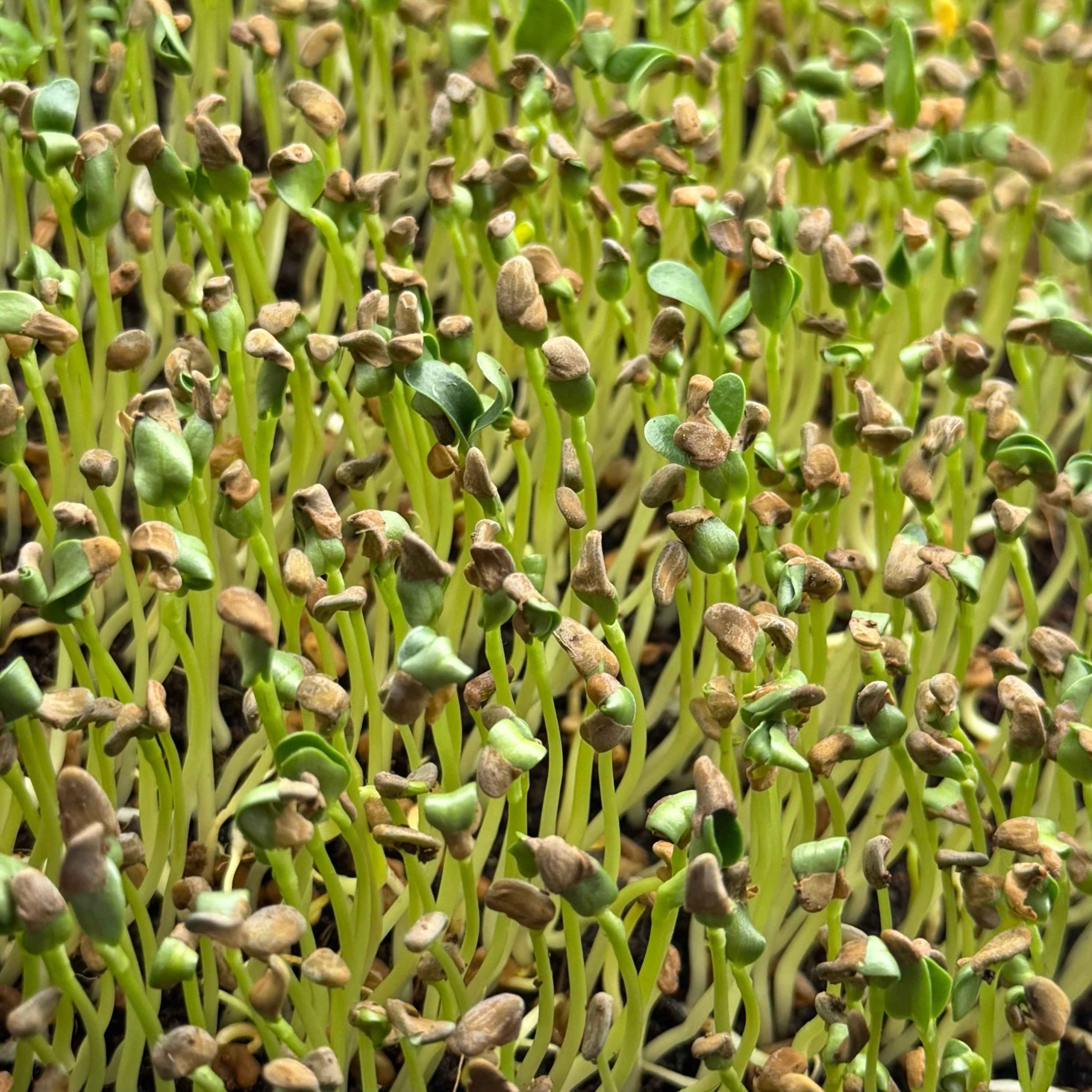
    My fenugreek seedlings are coming up, but many have the seed coat still attached to the leaves, preventing them from opening. What should I do?

    This can happen, particularly if the seeds weren’t covered or kept moist enough. Fenugreek seed coats are relatively soft but sometimes they cling. Here are some tips: Prevention: When sowing, you could cover seeds with a very thin layer of soil or vermiculite. This creates a bit of resistance that helps pull off the seed coats as the sprouts push up. Also, ensuring seeds were soaked sufficiently and not dried out during germination helps them shed coats. Solution for current crop: You can gently mist the seedlings to soften the seed husks and then use a clean finger or tweezers to help remove stubborn seed coats. Often, a light rub over the tops of the greens when they’re damp will dislodge many husks. Be very gentle to not uproot the seedlings. Increasing humidity slightly for a day can also help – for example, place the humidity dome back on for half a day to moisten those hulls, then remove it and manually shake or brush the tops. If some fenugreek sprouts never shed the hull and thus stay folded, you might just harvest those with hull on and use them for their flavor (the hulls are edible, just a bit fibrous – you might not want to eat them, but they won’t harm a soup stock). In general, enough seeds will shed properly that you get a fine crop. A few hull-stuck ones are common; simply pick them out or use as is. Next round, try the thin soil cover method and you’ll likely see almost all hulls left behind in the soil.

    Can I sprout fenugreek in a jar like for eating sprouts? How is that different from microgreens?

    Yes, fenugreek seeds can be sprouted in a jar - in fact fenugreek sprouts are a popular health food in their own right. Jar sprouting will give you fenugreek sprouts in ~4 days, which are mostly roots with a small shoot; they are crunchier and more bean-like. Microgreens, on the other hand, are grown on a medium with light, for about a week, until they develop green leaves. The difference is in taste and use: sprouts tend to taste more mild and bean-like, with a hint of fenugreek flavor, whereas microgreens have the true fenugreek leaf flavor (stronger, more bitter-sweet). Nutritionally, microgreens often have higher vitamin content because they photosynthesize and grow leaves, whereas sprouts might retain more starch/protein from the seed. If you’re aiming for the traditional “methi greens” experience, microgreens are the way to go. If you prefer quick, subtle-tasting sprouts to toss into salads or smoothies, jar sprouting is great. You can also do a hybrid: some growers sprout in a jar for 2–3 days, then transfer the sprouted seeds to soil to grow out as microgreens - this can shorten the overall tray time by a day or so. Both methods are relatively easy. Just remember, when consuming raw sprouts (jar method), always use food-grade seeds and sanitize properly, as sprouts carry a slightly higher risk of bacterial growth if not managed. Our seeds are suitable for both uses. So it’s up to your preference - for culinary uses like garnishing and making parathas, microgreens are superior; for simply tossing into a quick salad or snack, sprouts work too. Some folks even prefer the sprouts in smoothies (less bitter), and microgreens for cooked dishes. Feel free to experiment - fenugreek is affordable and fun to grow in many forms!

    Why Choose Deliseeds?

    • Untreated & Non-GMO, Conventional or Organic

      Safe, high-germination seeds. We also offer wide selection of certified organic seeds.

    • Fast EU Shipping

      Orders dispatched within 24h. Delivery times 1-5 working days.

    • 100% Satisfaction Guarantee

      If you're not satisfied - you'll get a replacement or a refund.

    • Expert Support

      We mean it! You get our personnal support to help you succeed.