
Details
Feathery dill aroma in a delicate micro form. Add to potatoes, soups, and salmon for a bright finish.
FULL SPECIFICATION TABLE
General information
| Common Name | Dill microgreens |
| Botanical Name | Anethum graveolens |
| Seed Type | Conventional, untreated, non-GMO |
| Stem/Leaf Color | Fine, feathery green leaves; slender stems |
| Flavor & Texture | Classic dill aroma with citrus‑anise notes |
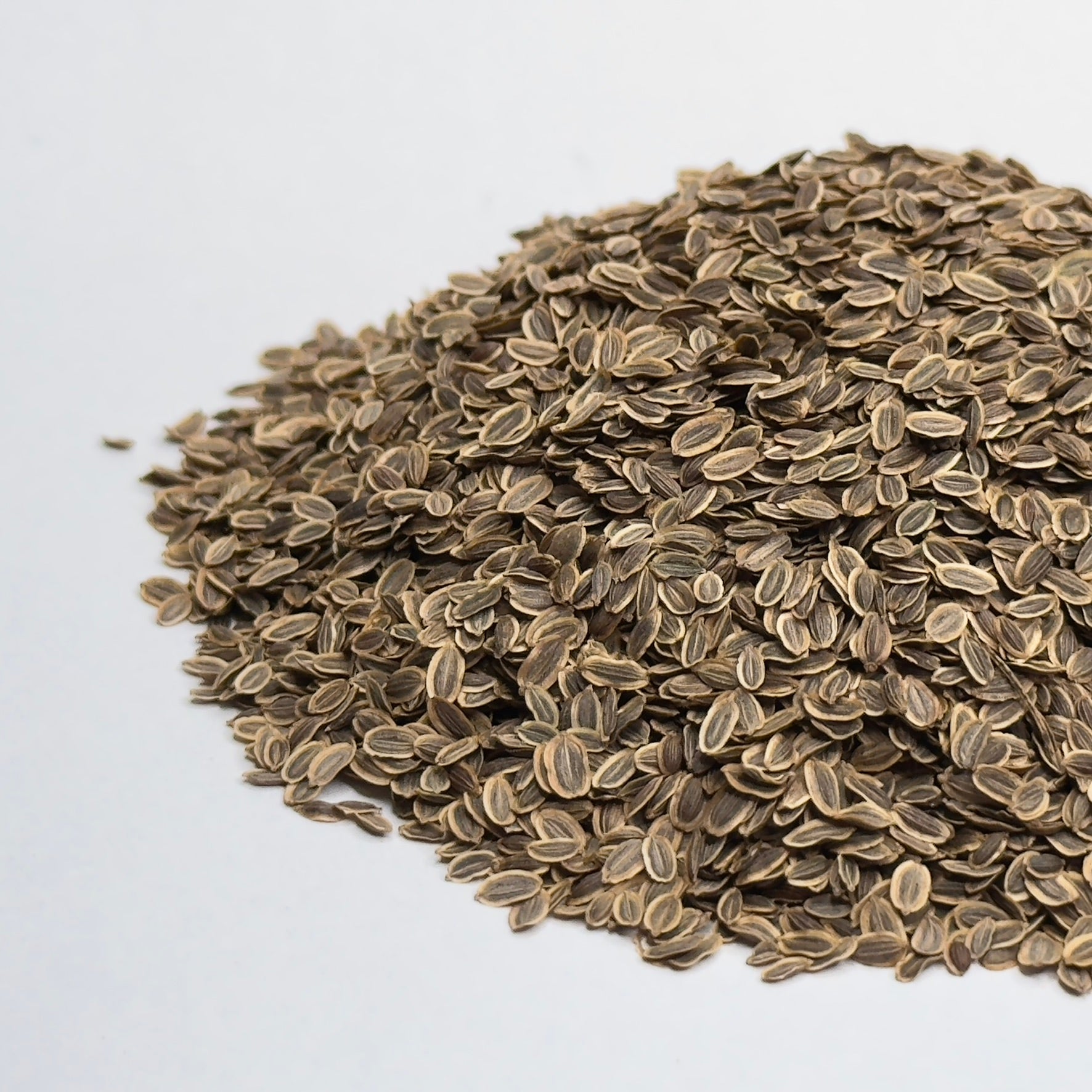
| Seed Count per 10g | ~6,000–7,000 seeds (≈600–700/g) |
Cultivation data
| Difficulty | Medium |
| Preferred Medium | Soil; consistent moisture; gentle airflow |
| Seeding Density (1020 tray) | 8 g |
| Seeding Density (10x10 cm) | 0.62 g |
| Expected Yield | ≈120–180 g per 1020 tray (first true leaf) |
| Soaking | Optional: 4–5 h cool water |
| Blackout Days | 3–4 days |
| Watering, pH & Temp | Bottom water; pH ~6.0–6.5; 18–22 °C |
| Sprouting Time | 6–7 days |
| Harvest Time | 14–16 days |
Health and nutrition facts
| Vitamins | Vitamin C; vitamin A precursors; vitamin K |
| Minerals | Calcium, iron, manganese |
| Notable Compounds | Essential oils (carvone, limonene), flavonoids |
| Health Benefits | Vitamin C & K and aromatic oils - support immune function and normal blood clotting; carminative herbs like dill may support digestive comfort. |
ABOUT
What are Dill microgreens?
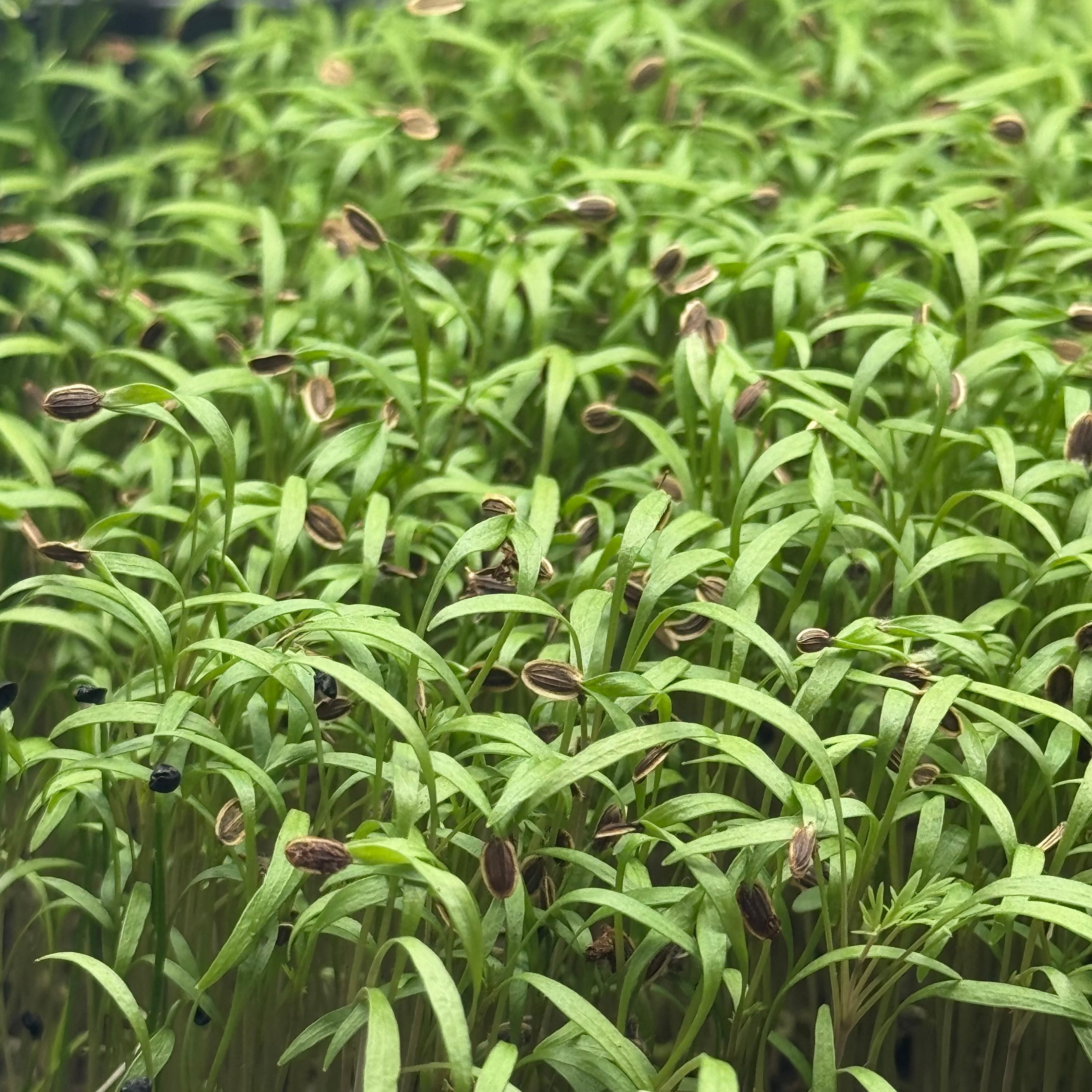
Dill is a beloved culinary herb, and in microgreen form, it offers the same aromatic delight in a smaller, more tender package. Dill microgreens start off a bit unassuming - when they first sprout, you'll see straight, narrow cotyledon leaves that look like grass. But give them a bit more time (usually into the second week) and they will produce their first frilly true leaves that look exactly like miniature dill fronds. At that stage, they are essentially micro-herbs, capturing the essence of dill weed. The microgreens are bright green and very delicate; they almost float if you toss them in the air.
The flavor of dill microgreens is wonderfully robust: sweet and herbaceous with that unmistakable dill taste. People often note a slight citrusy or lemony undertone and a hint of anise (licorice-like) in the aroma - that's the same profile as full-grown dill, meaning these micros have the potent essential oils even in early growth. If you chew a bit of dill microgreen, you'll get a burst of dill flavor that's slightly milder than a mature dill leaf (some find it a tad less bitter and more palatable fresh). Because micro dill is harvested young, it often has a "cleaner" taste - the flavor without the tougher texture of older dill.
Culinary Uses: Dill microgreens shine anywhere regular dill would. They're especially popular for garnishing seafood - for example, a small pile on gravlax or smoked salmon canape looks beautiful and adds that dill accent. Sprinkle them on potatoes (boiled potatoes with butter and micro dill - yum), in soups (they can elevate a borscht or a cream of cucumber soup just like the herb would). They're perfect to finish a pickled dish or to mix into a pickle brine for quick pickling cucumbers. Egg dishes love dill: try on scrambled eggs, omelettes, deviled eggs, or egg salad. The advantage of microgreens is you can add them generously without the tougher stems that older dill might have. They're also wonderful in dairy-based dips and spreads - mix chopped dill micros into cream cheese or Greek yogurt along with garlic for a simple veggie dip, or into softened butter to create dill butter for grilling fish. Because they are so tender, you can even use them as a salad green in a mixed salad to add a feathery texture and aroma. One creative use is blending them into smoothies or green juices for a surprising twist (think green juice with a hint of dill - not conventional, but some people do it for variety and health). If you brew tea, dill microgreens can make a mild dill tea (dill water is traditionally given for digestion). So, whether as a starring herb or a subtle background note, they're quite versatile.
Nutrition and Benefits: Dill has long been used in traditional remedies - for digestion (dill water for babies with colic, for example), for calming, and even for breath freshening. Dill microgreens carry many of the same nutrients and essential oils as the full plant. They are rich in vitamin A (from beta-carotene) which is good for vision and immunity, vitamin C for immune support, vitamin E for skin and as an antioxidant, and vitamin K for bone health. The B vitamins present (like folate, niacin) help with metabolism. Minerals such as iron (which helps prevent anemia), zinc (for immune and skin health), potassium (for heart health), and magnesium (for muscles and nerves) are found in dill micros too. The polyphenols and flavonoids in dill (e.g., quercetin, kaempferol) have anti-inflammatory and antioxidant effects. And dill's essential oils (like carvone and limonene) not only contribute to its fragrance but may help with digestive relaxation (hence dill's use against bloating and hiccups). While microgreens are small, some studies suggest microgreen versions can have similar or higher concentration of certain vitamins compared to mature plants, because young seedlings are in a growth spurt phase. Eating a handful of dill microgreens can thus give you a quick nutrient and enzyme boost, all raw and living. Plus, using them raw preserves their vitamin C and enzymes that would be lost if cooking older dill. So, adding these to your diet is both tasty and health-conscious.
GROWING INSTRUCTIONS
How to grow Dill microgreens?
Growing dill microgreens is slightly different from fast sprouts like radish - dill takes a bit longer and you want to let it get to that true leaf stage for best flavor. Here's how:
- Soaking: No need to presoak dill seeds. They are relatively small and somewhat flat, and they germinate fine on their own (in fact, soaking can sometimes lead to clumping or uneven sprouting).
- Sowing: Use a fine, well-draining soil mix. Scatter the dill seeds evenly on the surface. Aim for a medium density sowing - about 8-10 grams per 10x20 tray (or roughly 1 seed per cm²). They'll grow thin, so you might be tempted to sow thick, but remember they will develop those fronds that need some space for air. Gentle pressure: After sowing, press the seeds into the soil lightly to ensure good contact (dill seeds are a bit flat, so pressing helps the entire seed touch moisture). Optionally, cover with an extremely thin layer of soil or vermiculite (not more than a few millimeters) - this can help keep them moist during germination.
- Germination & Blackout: Cover the tray with a lid or another tray to maintain humidity and darkness. Dill takes about 6-7 days to germinate on average. It might start around day 4 or 5 for the first ones, but by day 7 you should see a bunch of little grass-like sprouts. Keep the soil consistently moist during this period - check daily, mist if the surface is drying (dill seeds need water to swell and break dormancy). However, do not oversaturate; damp, not soaked. Temperature around 20-22°C is optimal. If it's cooler (say 18°C), germination could take a couple days longer; if warmer (25°C), maybe slightly faster but too warm could encourage mold. So moderate is best. Tip: Some growers report improved germination by keeping dill in the dark a full week - that's fine, just keep an eye out that they don't get leggy. They usually won't because they germinate slowly. A gentle daily airing (lifting the lid for a minute) is good practice but not absolutely required if no mold is present.
- Light Phase: Once a majority of seeds have sprouted (around day 6 or 7), move the tray to light. In the beginning, the seedlings will be slender and not look like dill yet - just two narrow leaves. They also might be a pale yellow-green right at emergence due to lack of light; they'll green up quickly once exposed. Provide strong light - dill loves sunlight and will grow sturdier with good light. A sunny windowsill or grow lights for 12-16 hours a day works. Unlike some micros, dill does not mind full sun as it grows (it's basically a herb). Just ensure they don't dry out. If using sunlight, a few hours of direct morning sun would be great, but avoid scorching hot afternoon sun through glass until they have established. Temperature during growth can be normal room temp (18-22°C). They can tolerate slightly cooler nights which can actually make them sturdier. Watering: Now that they're growing, continue to keep the soil moist. Because dill's roots will start to penetrate, you might switch to bottom watering: add water to the under tray and let it soak up. This prevents disturbing the delicate stems. Dill microgreens have fine roots but they do drink a fair amount once the foliage starts coming in. Likely you'll water every 1-2 days depending on conditions. Good airflow is a plus - dill's fine stems can be prone to damping off if it's too humid with no ventilation. A small fan or simply not crowding trays will help.
- Growing On: Over the next week or two, you'll see the "grass leaves" (cotyledons) stand up and then, excitingly, the first true leaves appear looking like tiny dill sprigs. This usually happens around day 10-14. It's at this point you'll recognize the dill herb form. The microgreens will also emit that wonderful dill aroma when brushed. They can be harvested at cotyledon stage (around day 8-10) but the flavor will be mild - really best to wait for true leaves for full dill flavor. That means letting them grow likely to day 14 or even up to day 20. By day 20, many will have a couple sets of fronds. Keep an eye that they have sufficient nutrients in the seed/soil to get that far; most potting mixes have enough for 2-3 weeks of microgreen growth. You usually don't need to fertilize micro dill, but if they look a bit yellowish around day 12, you could give a half-strength seaweed or general hydroponic nutrient watering. Often not necessary if soil was decent. Ensure they get enough light to avoid excessive stretch; dill will grow taller naturally (~3 inches), but weak light can make them thin and pale.
- Harvest: Ideally, harvest when you see the microgreens have a nice tuft of dill-like leaves on top - about 2-3 inches tall. This is typically between day 14 and 21 after sowing, depending on temperature and light. You can harvest in one go or snip as needed (dill microgreens lend themselves to cut-as-you-use since they grow relatively upright and sparse, less tangling than say radish). Use sharp scissors or a knife. Cut near the base, but try not to include the very bottom part of the stem that might be a bit hard or have seed husk. Note that some dill seed husks may cling to the cotyledon on a few plants - by the time of harvest many will have fallen, but pick off any remaining brown husks when harvesting (they are edible but papery). You might also find that not all seeds germinated; that's normal (dill germ rates around 85%). Just avoid cutting any undeveloped ones. Work gently to not crush the delicate leaves. A 10x20 tray yields perhaps 80-120 grams of dill microgreens (they are lightweight since they're mostly fronds). It won't be as heavy yield as something like sunflower, but a little dill goes a long way in flavor.
Post-harvest: Immediately after cutting, if they are clean (no soil on them), you don't need to wash. In fact, washing can cause them to clump and bruise. If you see any medium attached, do a quick rinse in cold water and gently pat dry on paper towels. Store them in an airtight container or ziplock with a paper towel inside to absorb moisture. They store pretty well - about 5 to 7 days in the refrigerator - but the aroma will slowly fade after harvest, so for best flavor use within 3-4 days. Unlike some micros, dill microgreens won't usually regrow after cutting (they lack growing points once snipped). If you leave some uncut, they might continue to grow a bit more "baby dill" leaves, but typically it's better to start a new crop.
Dill microgreens - tips & troubleshooting
My dill microgreens are very thin and some fell over. How do I get them to be fuller or bushier?
Some of my dill microgreens have a brown shell stuck on the end of a leaf. Is this normal?
It’s been over a week and not all my dill seeds have sprouted. Should I wait longer?
Do dill microgreens have the same flavor strength as regular dill?
Why Choose Deliseeds?
-
Untreated & Non-GMO, Conventional or Organic Safe, high-germination seeds. We also offer wide selection of certified organic seeds.
-
Fast EU Shipping
Orders dispatched within 24h. Delivery times 1-5 working days.
-
100% Satisfaction Guarantee
If you're not satisfied - you'll get a replacement or a refund.
-
Expert Support
We mean it! You get our personnal support to help you succeed.