



Amaranthus cruentus
Amaranth, Red (white seeds) - microgreens seeds
✨Striking ruby foliage for elegant plating. Mild, earthy notes pair with citrus and soft cheeses.
- Regular price
-
44,00 zł - Regular price
-
- Sale price
-
44,00 zł
Couldn't load pickup availability
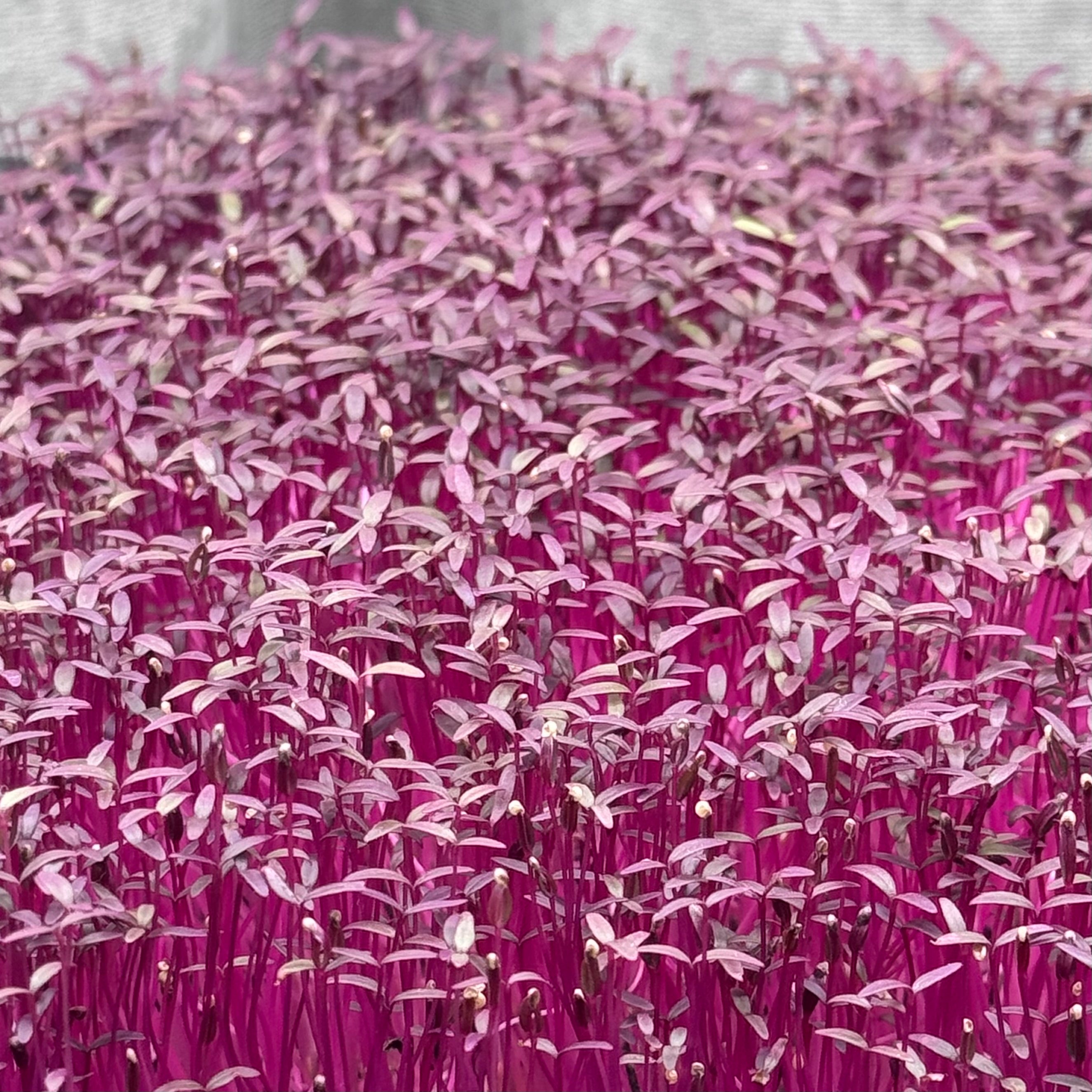
The most visually impressive microgreen you can grow — vivid magenta stems that make every plate look like art.
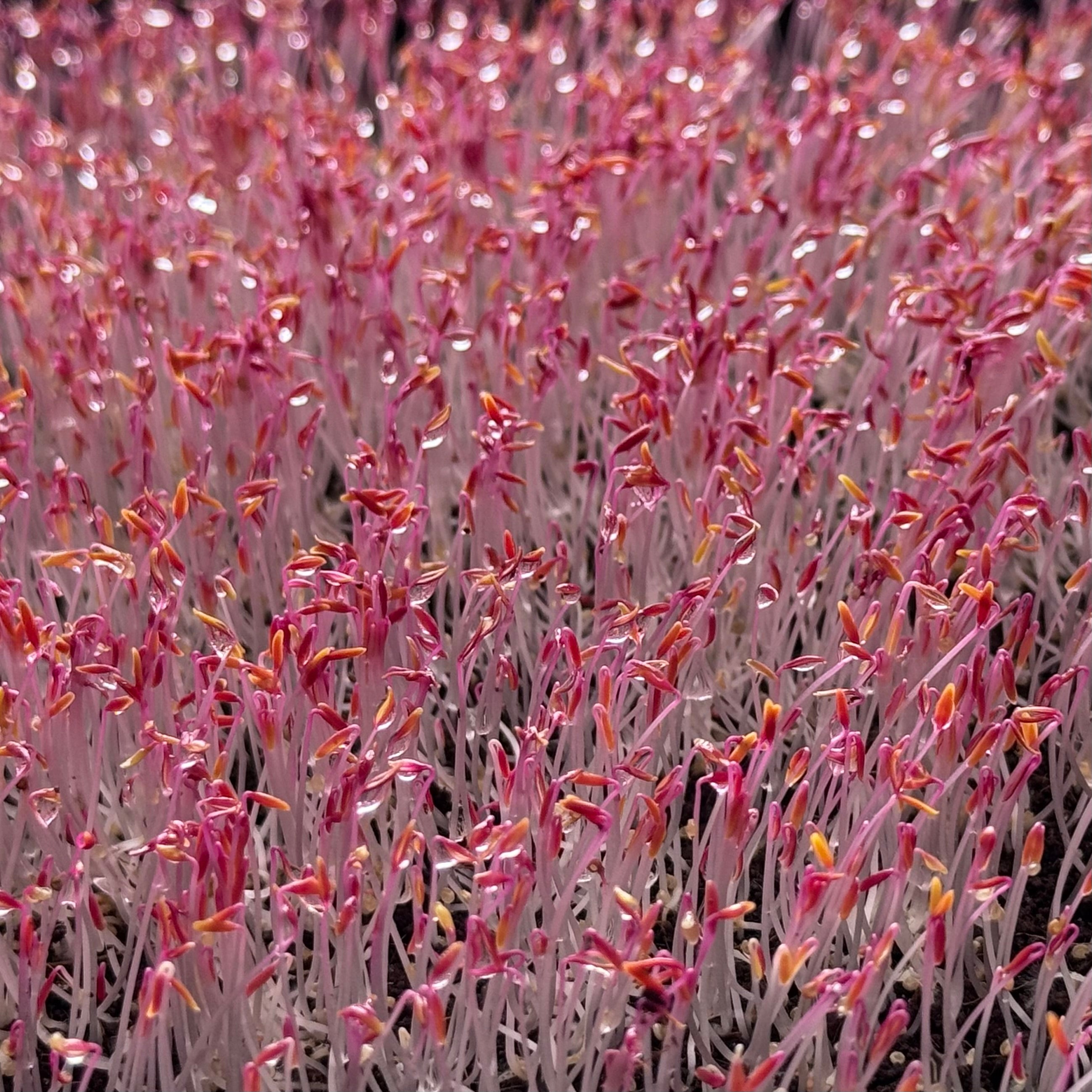
 Intermediate difficulty; rewards careful watering and warm temperatures with a stunning, dense tray of magenta and crimson stems
 Ready to harvest in just 8–12 days at cotyledon stage, or 14–17 days for fuller true-leaf growth
 Exceptionally rich in Vitamin K (up to 950% DV per serving), plus vitamins A, C, and E, iron, calcium, and high-quality plant protein
 Mild, earthy flavour reminiscent of beetroot with a faint nuttiness — a chef's favourite garnish for soups, sashimi, grain bowls, and salads
100% satisfaction guarantee
Your satisfaction is our top priority.
If something's not right, we’ll make it right — whether that means replacing your item or giving you a full refund. No fuss, no hassle.
SHIPPING INFORMATION
Shipping cost is based on weight and destination. Just add products to your cart and use the Shipping Calculator to see the shipping price.

Details
The most visually impressive microgreen you can grow — vivid magenta stems that make every plate look like art.
Intermediate difficulty; rewards careful watering and warm temperatures with a stunning, dense tray of magenta and crimson stems
Ready to harvest in just 8–12 days at cotyledon stage, or 14–17 days for fuller true-leaf growth
Exceptionally rich in Vitamin K (up to 950% DV per serving), plus vitamins A, C, and E, iron, calcium, and high-quality plant protein
Mild, earthy flavour reminiscent of beetroot with a faint nuttiness — a chef's favourite garnish for soups, sashimi, grain bowls, and salads
FULL SPECIFICATION TABLE
General Specification
| Common Name | Red Amaranth (Red Garnet Amaranth) |
| Botanical Name | Amaranthus tricolor |
| Seed Type | Microgreen seed — white/cream, tiny, round; hull-on |
| Stem/Leaf Color | Deep magenta to fuchsia stems; small maroon-green to crimson-purple cotyledon leaves |
| Flavor & Texture | Mild, earthy, slightly nutty with a beet-like undertone; tender and delicate texture |
| Seed Count per 10g | ~13,000–15,000 seeds per 10g (approx. 1,300–1,500 seeds/g) |
Cultivation Data
| Difficulty | Intermediate — sensitive to overwatering, low temperatures, and insufficient light; very rewarding once the method is dialled in |
| Preferred Medium | Organic potting mix or coconut coir (coconut coir preferred for mould resistance and water retention); soil depth 3–4 cm |
| Seeding Density (1020 tray) | 15g per 1020 tray (25×50cm) |
| Seeding Density (10x10 cm) | ~1.2g per 10×10cm |
| Expected Yield | ~130–185g fresh weight per 25×50cm tray (cotyledon–first true leaf stage) |
| Soaking | Not required — sow dry |
| Blackout Days | 3–4 days under blackout cover with weight; stacking trays recommended |
| Watering, pH & Temp | Bottom-water only once seedlings emerge; water pH 6.0–6.5; germination temperature 21–24°C; growing temperature 18–24°C; avoid direct sunlight |
| Sprouting Time | 3–4 days to germination |
| Harvest Time | 8–12 days (cotyledon stage); 14–17 days (first true leaf stage) |
Health & Nutrition
| Vitamins | Exceptionally high in Vitamin K (up to 950% DV per 100g); significant Vitamins A, C, and E; contains B-vitamins including folate, thiamin, and niacin |
| Minerals | Rich in calcium, iron, magnesium, potassium, phosphorus, manganese, zinc, and copper |
| Notable Compounds | Beta-carotene, betalains (pigment antioxidants responsible for the red colour), flavonoids, chlorophyll, squalene precursors, and complete amino acid profile with ~15% protein by dry weight |
| Health Benefits | Supports bone health and blood clotting (Vitamin K); promotes immune function and collagen synthesis (Vitamin C); antioxidant protection against oxidative stress (betalains, beta-carotene); supports cardiovascular health; high plant protein with 30% more protein than rice by weight; high dietary fibre supports satiety and digestion |
ABOUT
Red Amaranth microgreens are among the most visually arresting greens in any professional kitchen — their deep magenta stems and small maroon-green leaves erupt from the tray like a field of tiny jewels. Bite into a pinch and you'll find a mild, earthy flavour close to beetroot, with a tender, almost melting texture that disappears cleanly on the palate. Chefs prize them above almost all other microgreens precisely because that electric fuchsia colour holds even after plating, making a simple ceviche or white soup look genuinely expensive. Grow them now while restaurant-grade garnishes are commanding premium prices at market — a single tray harvested at peak colour is a conversation-starter that sells itself.
GROWING INSTRUCTIONS
Why Choose Deliseeds?
-
Untreated & Non-GMO, Conventional or Organic Safe, high-germination seeds. We also offer wide selection of certified organic seeds.
-
Fast EU Shipping
Orders dispatched within 24h. Delivery times 1-5 working days.
-
100% Satisfaction Guarantee
If you're not satisfied - you'll get a replacement or a refund.
-
Expert Support
We mean it! You get our personnal support to help you succeed.