


Details
Bold and peppery with round ‘lily‑pad’ leaves. A few sprigs lift eggs, sushi, and seafood with a wasabi‑like kick.
FULL SPECIFICATION TABLE
General information
| Common Name | Green Nasturtium microgreens |
| Botanical Name | Tropaeolum nanum |
| Seed Type | Conventional, untreated, non-GMO |
| Stem/Leaf Color | Thick stems; round leaves; stems pink to pale green |
| Flavor & Texture | Bold peppery, wasabi‑like; juicy, succulent |
| Seed Count per 10g | ~80–100 seeds (≈8–10/g) |
Cultivation data
| Difficulty | Medium |
| Preferred Medium | Soil/compost; strong light after uncovering |
| Seeding Density (1020 tray) | 133 g |
| Seeding Density (10x10 cm) | 10.31 g |
| Expected Yield | ≈160–200 g per 1020 tray (2–4 leaves) |
| Soaking | Yes: 2–6 h warm water |
| Blackout Days | 5–8 days |
| Watering, pH & Temp | Bottom water; pH ~6.0–6.5; 18–22 °C; airflow |
| Sprouting Time | 4–5 days after soak |
| Harvest Time | 14–21 days |
Health and nutrition facts
| Vitamins | Vitamin C; provitamin A |
| Minerals | Potassium, iron, manganese |
| Notable Compounds | Glucosinolates, isothiocyanates; lutein |
| Health Benefits | Vitamin C and natural isothiocyanates — support immune defenses and normal airway comfort; stimulating, peppery compounds may aid appetite. |
ABOUT
What are Green Nasturtium microgreens?
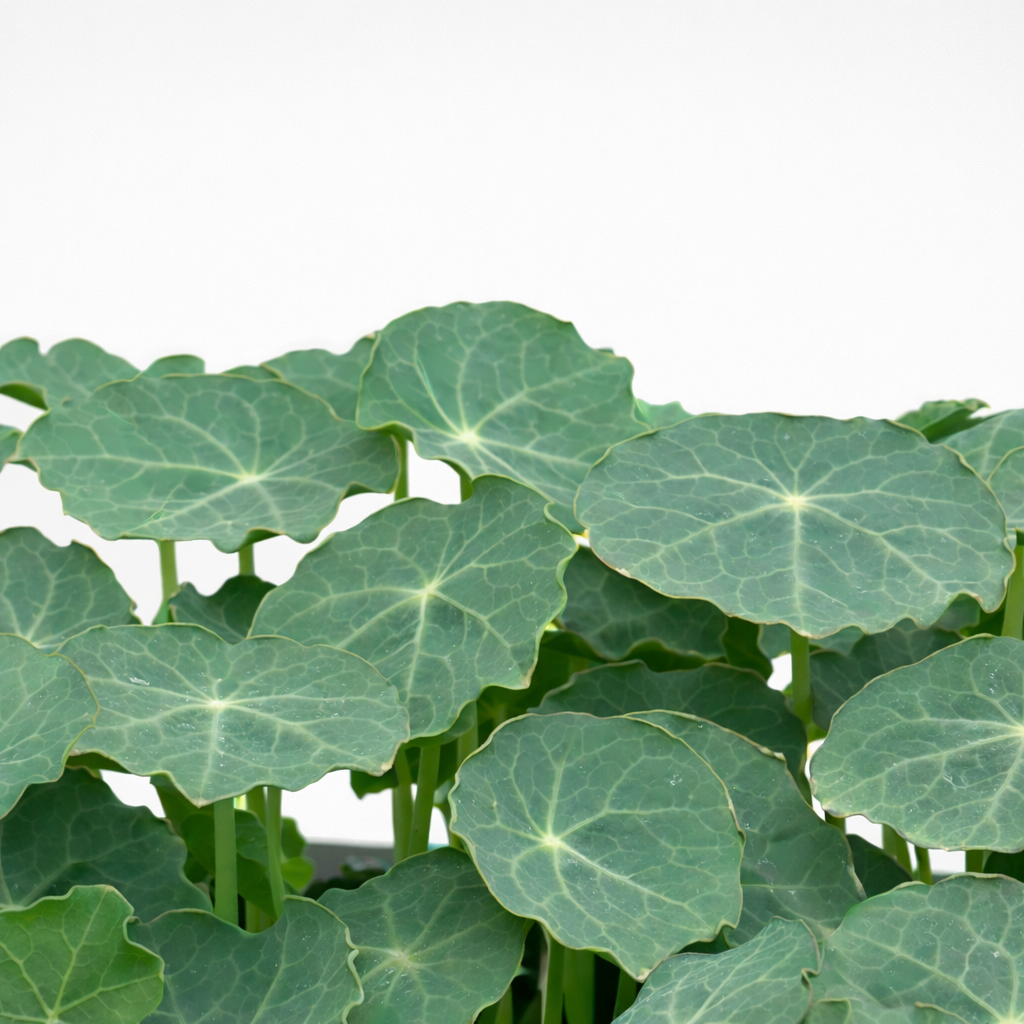
Green Nasturtium microgreens come from varieties of Tropaeolum majus that typically have green stems and leaves (as opposed to the dark-leaved or red-stem types). As microgreens, nasturtiums are truly unique: they unfold into miniature lily-pad leaves that are succulent and tender. Don't be fooled by their cute appearance - their taste packs a punch! Nasturtium micros have a distinct peppery flavor that you can't get with any other microgreen, often likened to radish, watercress, or even a mild wasabi heat. The flavor is bold, spicy, and leaves a tingling sensation. If you nibble a leaf, you'll get a burst of peppery warmth followed by a slight vegetal sweetness. This strong taste makes nasturtium microgreens a favorite for those looking to add a culinary kick to their creations.
In terms of usage, green nasturtium microgreens are extremely versatile for a chef or home cook who loves experimenting. Their succulent, crisp texture and spicy flavor can liven up all sorts of dishes. Toss a handful into a mixed green salad to give unexpected zing. They pair wonderfully with rich foods: try them on a buttered sandwich, with eggs, or atop avocado toast - the pepperiness cuts through the richness and balances the palate. High-end restaurants love nasturtium microgreens as an edible garnish: you'll see them on canapés, seafood dishes, and even sushi rolls, where they provide wasabi-like spice and beautiful plate presentation. The round, shield-like leaves also make a lovely visual contrast when plated next to angular or finely chopped ingredients.
Nutritional and Health Notes: Nasturtium microgreens aren't just about flavor - they're also noted for their healthful components. These micros are rich in vitamin C (historically, nasturtiums were used to prevent scurvy) and contain vitamin A and B-family vitamins as well. The high vitamin C content supports immune health, while vitamin A (beta-carotene) is good for eyesight and skin. Additionally, nasturtiums provide minerals like iron, calcium, potassium, and others in small quantities. A unique aspect of nasturtium is the presence of mustard oils and the enzyme myrosinase - this combination is known to have antibacterial and antifungal effects. In fact, in herbal medicine nasturtium is considered a natural antibiotic; its compounds can help combat certain pathogens. While we make no medical claims for a salad garnish, it's certainly a "functional food" microgreen - giving you a dose of nutrients and potentially beneficial phytochemicals along with its intense flavor. Eating nasturtium micros raw ensures you get those enzymes and vitamin C intact (cooking would destroy some of them).
Green vs. Red Nasturtium: The green variety of nasturtium microgreens typically has bright green leaves and lighter (often green or pinkish) stems. Flavor-wise, both green and red varieties are similar (peppery), but some find the green variety slightly milder and more vegetal, whereas dark/red varieties might have a hint of "cool" aftertaste along with spice. Green nasturtium micros tend to grow vigorously and may have a slightly higher germination rate compared to some fancy dark varieties. This makes them a great choice for beginners who want to experience nasturtium's flavor without as much fuss. They still require a bit of patience and care, but they reward you with a generous harvest of large, attractive greens.
GROWING INSTRUCTIONS
How to grow Green Nasturtium microgreens?
Nasturtium microgreens are moderately challenging but very rewarding to grow. The seeds are large and somewhat tough, so they need a little extra attention compared to smaller microgreen seeds.
-
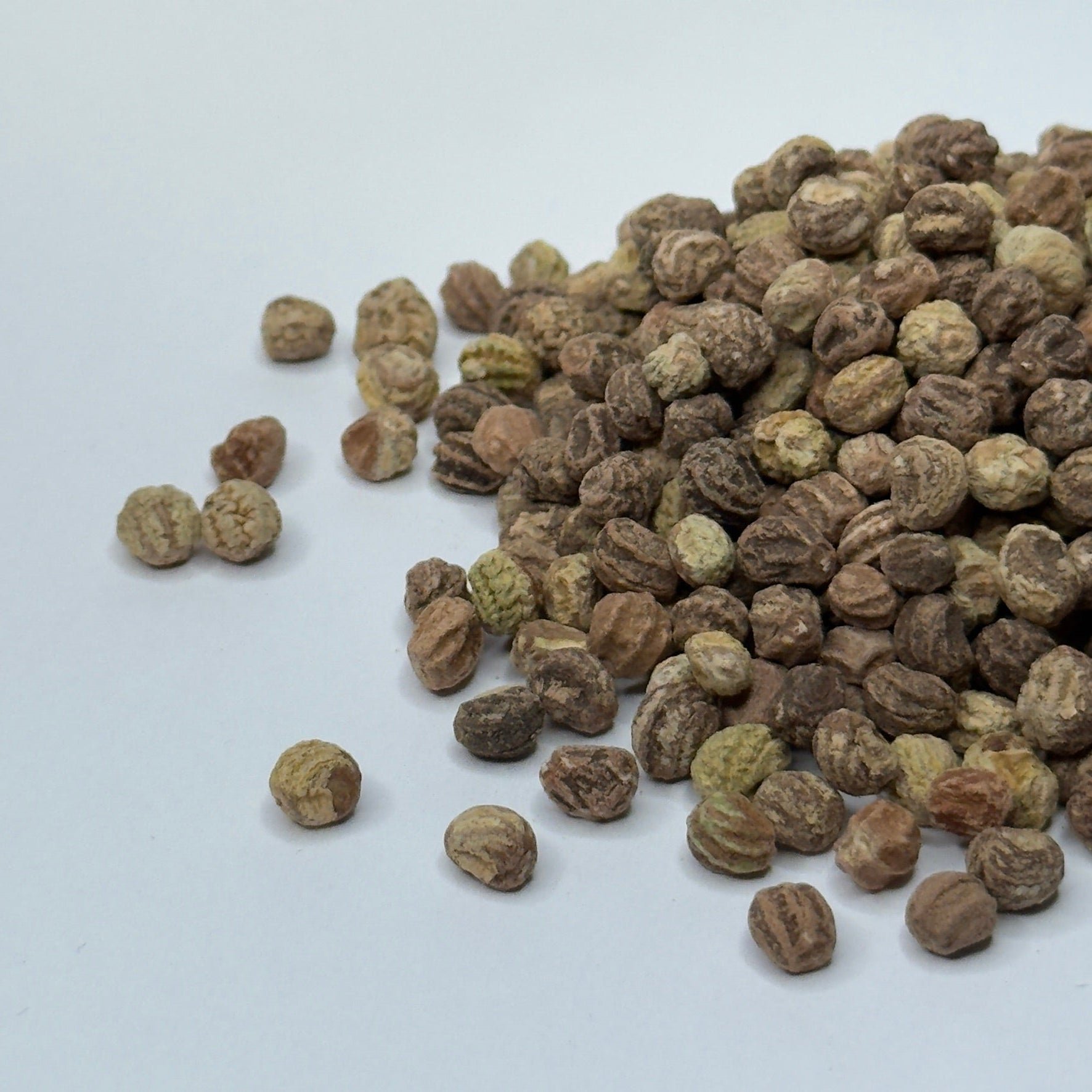
Pre-soak (Important): To improve germination, soak nasturtium seeds in room-temperature water for about 6 hours before sowing. The seeds have a hard, wrinkled coat that softens with soaking, allowing moisture to penetrate and kickstart germination. After soaking, rinse them gently. (If you skip soaking, expect uneven and slower germination.)
-
Sowing: Fill your tray with 1-2 cm of moist, sterile potting mix or coco coir. Spread the pre-soaked nasturtium seeds evenly across the surface. Nasturtium seeds are larger than most microgreen seeds, so aim for a moderate density (e.g., about 8-10 seeds per square inch, or roughly 200-250 grams for a standard 10x20 tray). Give each seed a little space; overcrowding can encourage mold on these big seeds. Gently press them into the soil. Cover the seeds lightly with a thin layer of soil (or vermiculite) - just enough to hide them. Unlike tiny micro seeds that stay on the surface, nasturtium benefits from a light cover to maintain moisture and darkness during germination. Finally, mist the surface with water to ensure the seeds and top layer are damp.
-
Germination and Blackout: After sowing, cover the tray to create darkness. You can place another tray on top (with a small weight) or use a blackout dome. Nasturtium germinates best in the dark at a cool-to-moderate temperature; around 18-21°C is ideal. Germination will be uneven and slow compared to fast microgreens - expect the first sprouts around day 6 or 7, and others may continue emerging up to day 10 or more. This unevenness is normal for nasturtium, so don't worry if not all seeds sprout at once. Keep the medium moist - check daily and mist as needed, but avoid overwatering. Because nasturtium seeds are large and porous, they can be prone to mold if waterlogged. A useful trick is to uncover the tray briefly each day to give a fresh air exchange ("a refreshing breath for your little greens" as some growers say). After about 7 days of blackout, most seeds that will germinate should have done so. When you see a majority of sprouts ~1-2 cm tall, it's time to move on.
-
Light and Growing On: Move the tray into light - nasturtium microgreens prefer bright light but not extreme heat. A sunny window or grow lights will do; if using sunlight, avoid mid-summer direct sun through glass which could overheat the tender seedlings. Aim for 12-16 hours of light a day. Now that they're in light, water as needed to keep soil evenly moist. Bottom-watering is ideal: add water to a bottom tray and let the soil soak it up, which keeps leaves dry and reduces mold risk. If top-watering, do it gently around the base of stems. Good airflow is critical at this stage too - nasturtium seedlings are chunky and retain moisture, which fungi love. Use a fan or ensure some ventilation in the growing area. You will notice nasturtium microgreens really start to take off after day 10. They grow almost like "weeds" under good conditions, quickly unfurling large green leaves. Keep an eye out for any fuzzy white mold; if spotted, improve airflow and reduce watering frequency.
-
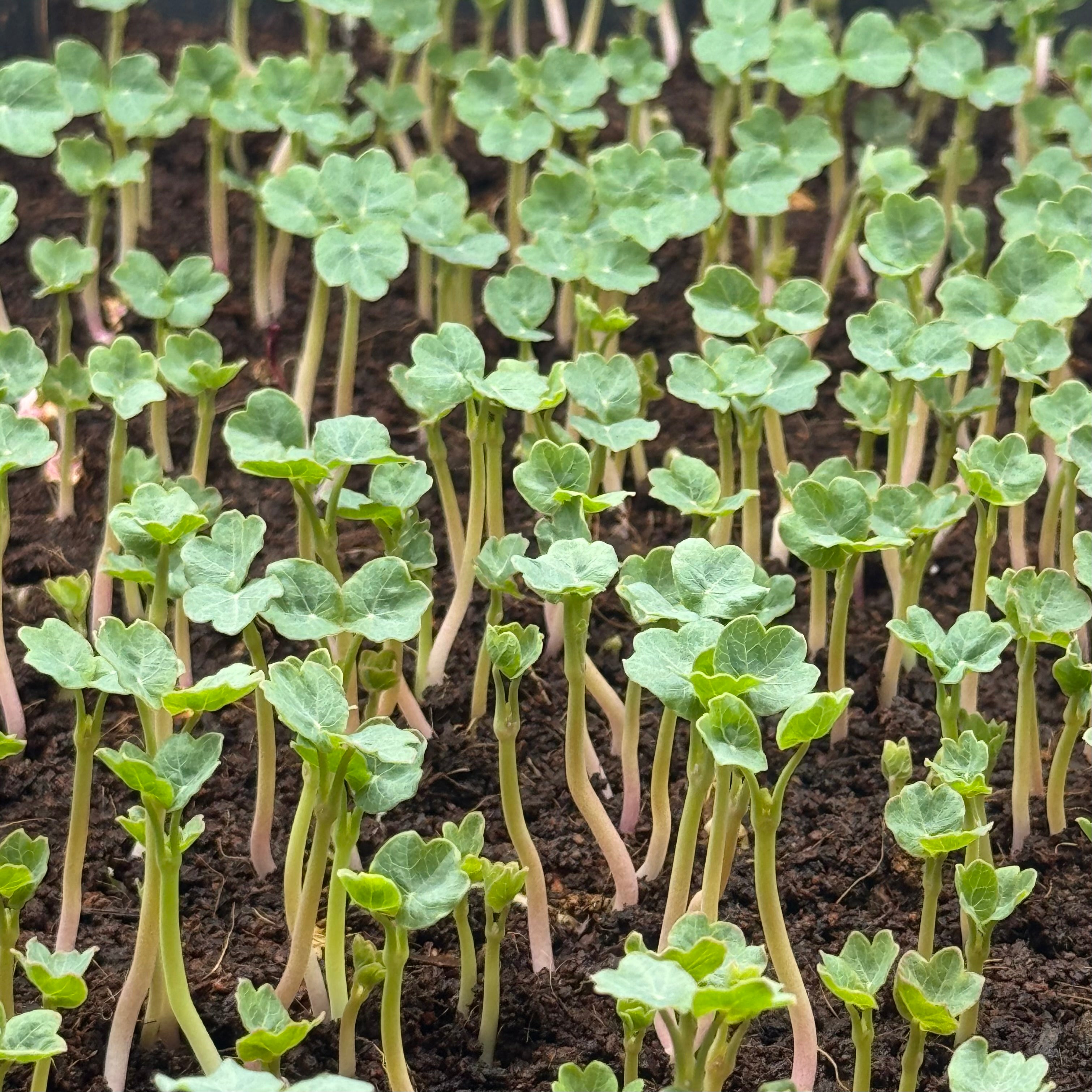
Harvest: By day 14-16, your nasturtium microgreens should be 5-8 cm tall with lovely round leaves. Some later sprouts will be smaller - you can let the tray go a bit longer (up to ~20 days) to get stragglers to size, but the risk of mold or the older ones turning a bit tough increases. It's usually best to harvest once the majority are ready and vibrantly green. Use sharp scissors or a knife to cut the stems just above the soil. You'll immediately smell that peppery aroma! One tip: Harvest right before use if possible; nasturtium microgreens taste best fresh. If you need to store them, see below. Expect a somewhat lower yield than easier micros (like radish) - nasturtium's germination rate is around 75-85% in practice, and each seed yields one good-sized microgreen. From a 10x20" tray, you might get ~150-200 g of product. Remove any unsprouted or moldy seeds carefully during harvest.
-
Post-harvest handling: Gently rinse the harvested microgreens in cold water and dry on paper towels or a salad spinner. They are relatively sturdy and will hold up for about a week refrigerated. Store in a clamshell or sealed container with a dry paper towel to absorb excess moisture.
Green Nasturtium microgreens - tips & troubleshooting
My nasturtium seeds barely sprouted, and some got moldy – what did I do wrong?
The leaves look healthy but some seed shells are stuck on the cotyledons. Should I peel them off?
My nasturtium microgreens are flopping over or seem top-heavy. How do I keep them upright?
Are nasturtium microgreens safe to eat? I heard nasturtium has antibiotic properties – any side effects?
Why Choose Deliseeds?
-
Untreated & Non-GMO, Conventional or Organic Safe, high-germination seeds. We also offer wide selection of certified organic seeds.
-
Fast EU Shipping
Orders dispatched within 24h. Delivery times 1-5 working days.
-
100% Satisfaction Guarantee
If you're not satisfied - you'll get a replacement or a refund.
-
Expert Support
We mean it! You get our personnal support to help you succeed.