



Vigna angularis
Adzuki Bean - microgreens seeds
✨
- Regular price
-
13,00 zł - Regular price
-
- Sale price
-
13,00 zł
Couldn't load pickup availability
Chunky, crisp and quietly sweet — adzuki bean microgreens bring East Asian soul to every plate.
 Easy to grow on soil or coco coir; stout stems stand up well under a 3–4 day blackout and reward you with a generous, densely packed tray.
 Ready to harvest in as little as 8–10 days after sowing; soaking overnight is the only prep trick you need.
 Rich in folate (B9), vitamin C, iron, magnesium, manganese and polyphenols; protein and fibre content support satiety and gut comfort.
 Sweet, nutty flavour with a satisfying juicy crunch — perfect layered into grain bowls, ramen, sushi rolls or scattered over miso soup just before serving.
100% satisfaction guarantee
Your satisfaction is our top priority.
If something's not right, we’ll make it right — whether that means replacing your item or giving you a full refund. No fuss, no hassle.
SHIPPING INFORMATION
Shipping cost is based on weight and destination. Just add products to your cart and use the Shipping Calculator to see the shipping price.


Details
Chunky, crisp and quietly sweet — adzuki bean microgreens bring East Asian soul to every plate.
Easy to grow on soil or coco coir; stout stems stand up well under a 3–4 day blackout and reward you with a generous, densely packed tray.
Ready to harvest in as little as 8–10 days after sowing; soaking overnight is the only prep trick you need.
Rich in folate (B9), vitamin C, iron, magnesium, manganese and polyphenols; protein and fibre content support satiety and gut comfort.
Sweet, nutty flavour with a satisfying juicy crunch — perfect layered into grain bowls, ramen, sushi rolls or scattered over miso soup just before serving.
FULL SPECIFICATION TABLE
General Specification
| Common Name | Adzuki Bean microgreens (also: Azuki, Red Bean, Red Cowpea) |
| Botanical Name | Vigna angularis |
| Seed Type | Conventional, untreated, non-GMO |
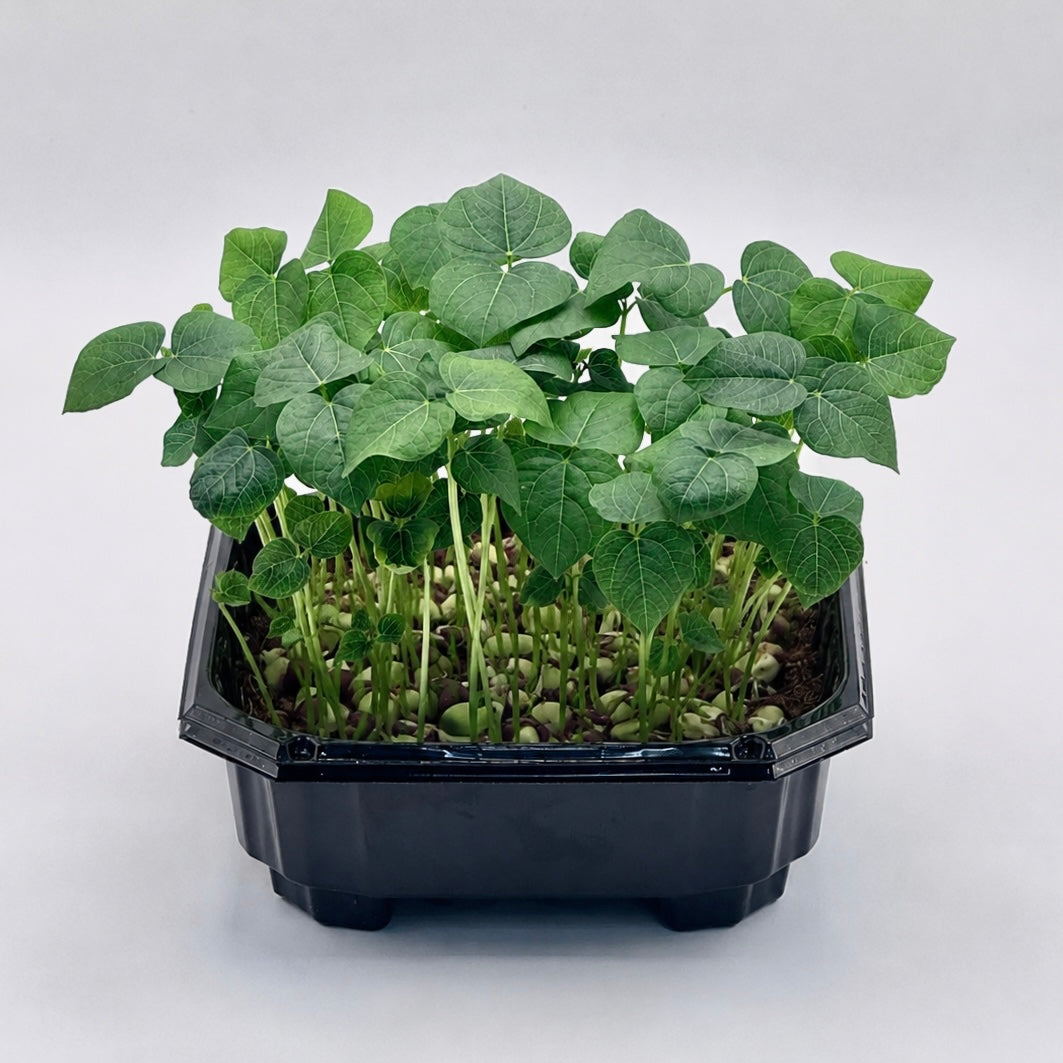
| Stem/Leaf Color | Stout, pale cream to light green stems; broad, vivid green cotyledon leaves; deep red seed coats may remain visible at the base |
| Flavor & Texture | Sweet and nutty with a mild legume undertone; crisp, juicy stems with a satisfying snap |
| Seed Count per 10g | ≈60–100 seeds (≈6–10 per gram, depending on cultivar) |
Cultivation Data
| Difficulty | Easy to moderate (consistent moisture management is key; avoid waterlogging) |
| Preferred Medium | Soil or coco coir; firm, even seed-to-medium contact is essential |
| Seeding Density (1020 tray) | 200g per 1020 tray (25×50 cm) — note: sources vary widely from ~57g (2 oz, low-density method) to 450g (high-density method); 200g is a practical mid-range for microgreen production |
| Seeding Density (10x10 cm) | 16g per 10×10 cm |
| Expected Yield | ≈550g per 1020 tray (approx. 2.5×–3.5× seed weight) |
| Soaking | Yes: 8–12 hours in cool water; drain thoroughly before sowing |
| Blackout Days | 3–4 days stacked with gentle weight; some sources recommend up to 6 days for fuller stem extension |
| Watering, pH & Temp | Bottom-watering preferred; keep evenly moist, not waterlogged. pH 6.0–6.5. Temperature 18–22 °C with steady airflow. |
| Sprouting Time | 2–3 days after soaking |
| Harvest Time | 7–12 days from sowing (most commonly 8–10 days) |
Health & Nutrition
| Vitamins | Vitamin C, folate (B9), vitamin K, vitamin A, B1 (thiamin), B2 (riboflavin), B3 (niacin), B5 (pantothenic acid) |
| Minerals | Iron, magnesium, potassium, manganese, copper, calcium, phosphorus, zinc |
| Notable Compounds | Polyphenols (including flavonoids and sinapic acid), resistant starch, plant-based protein (~18–25%), dietary fibre |
| Health Benefits | Supports antioxidant defences and helps reduce oxidative stress; high folate content supports cellular health and is important during periods of growth; protein and fibre promote satiety and support gut comfort; manganese and copper contribute to healthy metabolic function |
ABOUT
Adzuki bean microgreens are the sprightly young form of one of East Asia's most revered legumes — tiny, shiny crimson seeds that have fed cultures for over 5,000 years. At harvest, the stout pale stems hold broad, vivid green leaves with a flavour that is genuinely sweet and nutty, closer to fresh pea shoots than a grassy green, with stems that snap with a satisfying, juicy crunch. Scatter them over a warm bowl of miso ramen or fold them into a sushi hand roll and they hold their own without wilting — no delicate handling required. Adzuki microgreens are one of those rare crops that reward both the first-time grower and the seasoned producer: straightforward to manage, impressively yielding and genuinely distinctive on the palate.
GROWING INSTRUCTIONS
Why Choose Deliseeds?
-
Untreated & Non-GMO, Conventional or Organic Safe, high-germination seeds. We also offer wide selection of certified organic seeds.
-
Fast EU Shipping
Orders dispatched within 24h. Delivery times 1-5 working days.
-
100% Satisfaction Guarantee
If you're not satisfied - you'll get a replacement or a refund.
-
Expert Support
We mean it! You get our personnal support to help you succeed.